"Autism care is medico-psycho-educational. It can last up to the age of 22" Dr. Mukau
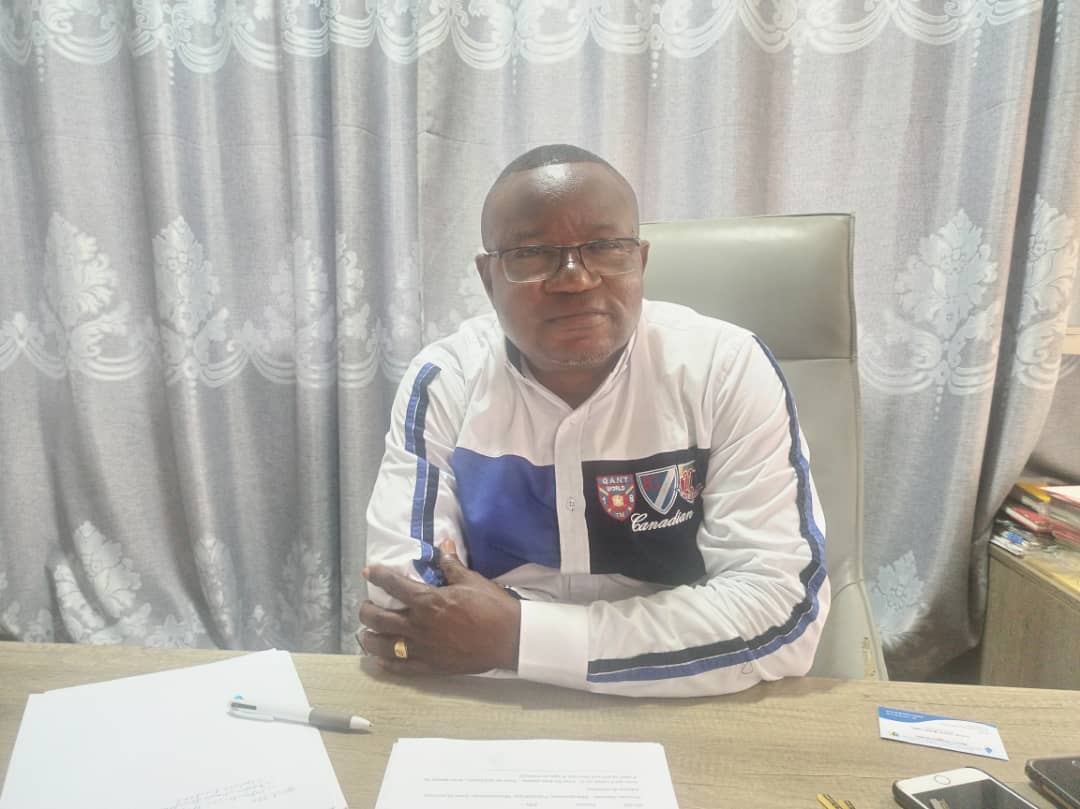
Dr. Mukau Ebwel is a psychologist specializing, among other things, in the care of individuals with neurodevelopmental disorders such as autism.
He directs CEIEHMA, the Center for Assessment and Intervention for Children with Intellectual Disabilities and/or Autism.
This center operates in three districts of Kinshasa and cares for autistic children aged 1 to 22, with the goal of treating them on a case-by-case basis and equipping them to cope independently with adult life.
We visited his office to find out how things work.
Upon first meeting, the specialist informed us that the management of these neurodevelopmental disorders occurs at, at least, two different levels, depending on the situation.
These are medical and psychoeducational cases.
“As for me, I collaborate with the EPST through the Special Education Directorate… The approach is medical-psycho-educational. The medical aspect comes into play when there are medical conditions associated with the autism, particularly in the individual. In such cases, we must consult with doctors. We have three centers for the psychoeducation department. We have Lemba, Ngaliema, and Bandal,” he stated.
He added: “The education at Lemba and Ngaliema provides what is known as specialized training. It is psychoeducation. We care for them in a special and tailored way from age 12 until they are 20 or 22.”
These centers have incorporated a pre-vocational program for adolescents to teach them a trade and make them useful to society and self-reliant in life.
The Bandal center, he continued, teaches using an inclusive approach recommended by the Ministry of Special Education and Training (EPST) to ensure that all children with specific challenges can receive a basic education, regardless of their circumstances.
“Here, we primarily operate through the mainstream school, which includes both the special education school and regular classes, where there is a complex dynamic for learning language, reading, and other behaviors necessary for independence,” he explained.
The results, says Professor Mukau Ebwel, are positive.
“I would even say more than positive. We couldn’t believe that an autistic child could take the ENAFEP. We have a child here who took the ENAFEP and scored over 60%. We are preparing to send another one this year, and next year we will be able to send two,” he noted.
To this end, the expert laments the lack of support from the government and other partners in providing guidance for these specific children.
As a reminder, autism is not a disease, but rather a neurodevelopmental disorder that affects key areas of a child’s development.
A child with autism faces challenges adapting to the school environment in particular.
Autism spectrum disorders (ASD) affect a child’s ability to learn effectively in a school setting.
Early and appropriate intervention can significantly reduce symptoms and provide a future for children born with autism.
Cynthia Kanama