Actualités
16 April 2026

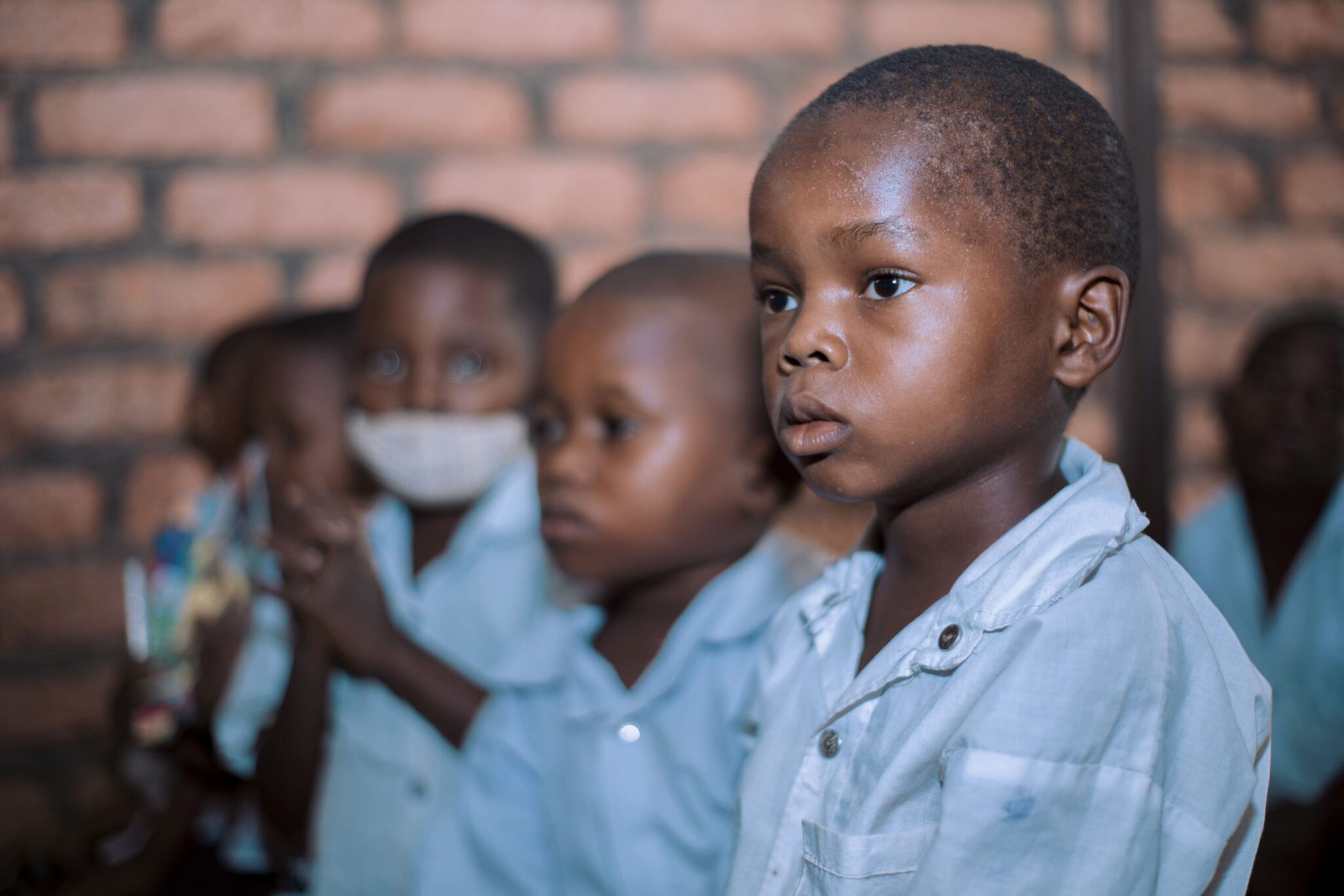
For several years now, education experts have been emphasizing the benefits of starting children’s schooling with preschool. This is because numerous studies have shown that children who begin their schooling with preschool learn more easily and perform better. With this in mind, governments around the world are sparing no effort to not only promote early childhood education but also to ensure its protection.
Thus, the issue of Early Childhood Education and Care (ECEC) was the focus of discussions at a conference held from November 14 to 16, 2022, in Tashkent, Uzbekistan. The event brought together over 2,860 participants from around the world, nearly all of whom were education professionals.
Representing the Democratic Republic of the Congo, OTTO Michel, an inspector and expert in preschool education, highlighted the parallels between the contributions of various participants at the conference and three pillars of the Sectoral Strategy for Education and Training (SSEF 2016–2025) in the report he prepared. These three pillars are access, quality, and governance. The SSEF 2016-2025 is a document that serves as a guide for the Congolese government in implementing various reforms of the Congolese education system.
QUALITY
According to the SSEF 2016-2025, the quality of learning applies to the preschool, primary, and secondary levels, among others. Regarding preschool education, for example, this document advocates for improving educator training by introducing modules on early childhood care into teacher education programs.
This SSEF objective aligns with the remarks made by Dr. Tariq of Dubai Cares during the Tashkent conference: “We need innovative programs and a particular focus on teacher training. It is important to establish an ECCE development index,” he stated.
Cloe Farer, for her part, recommends that early childhood education professionals gain a thorough understanding of how a child’s brain functions. According to her, the brain plays a significant role in knowledge acquisition: “Understanding how a child’s brain functions is essential for every teacher and other educational practitioner because,” she continues, “it impacts the learner’s acquisition of knowledge and development of skills.”
For Paul Lesman, incorporating games into learning plays a key role in improving its quality: “It’s not just about Western games, but rather games contextualized to the cultures of each region and each people,” he stated.
Finally, good nutrition will greatly contribute to improving the quality of learning.
ACCES
One of the SSEF’s priorities is universal primary education. Regarding preschool, this document projected that gross enrollment rates for children should reach 15% by 2025, up from 4.7% in 2014, particularly in rural areas.
This goal is virtually unattainable because, according to the report by OTTO Michel, the preschool enrollment rate in the DRC is 5.6%, while the SSEF is set to conclude in 2025. The same report reveals that the government aims to ensure that 80% of children are enrolled in the country’s preschools by 2030.
Speakers in Tashkent also emphasized the need for governments to enact laws and ensure their enforcement in support of ECCE. These laws should enable access to preschool for all children regardless of their social status and guarantee equity.
Such laws already exist in some sub-Saharan African countries, but their implementation is lacking, noted Sidibé Dédéou Ousmane, Mali’s Minister of Education.
Furthermore, governments must address the factors that hinder children’s access to school. These include “situations of adversity, violence, abuse, and survival, etc.”
The countries participating in the conference shared their experiences regarding strategies implemented to increase children’s access to preschool. The report prepared by Otto Michel, for example, mentions “school buses,” a practice that involves transporting “children from remote villages in school buses to receive appropriate education.”
In Uzbekistan, for example, cartoons are produced and broadcast to attract children to school. Mobile preschools have also been established with specific curricula, particularly in national languages.
GOVERNANCE
Regarding the improvement of governance in the education sector, the government has opted to involve many of its partners. Among them are: religious denominations, local communities, businesses, individuals, technical and financial partners, etc.
Strengthening governance should involve, in particular, a transformational shift in mindsets aimed at instilling civic and moral values based on responsible citizenship.
Responsible citizenship begins with proper education at the preschool level. Hence, Venezuelan President Nicolás Maduro’s call to policymakers to allocate more funding to preschool education:
“It is unthinkable to finance or invest in primary education without considering preschool education, which is the foundation,” he stated
Otto Michel, an expert on preschool education from the DRC, welcomes this initiative and calls on the government to continue seeking such opportunities to share experiences with experts from other nations. He also calls on missionaries to organize feedback sessions with their compatriots to share the information and knowledge gained during such meetings.
Deleine DIAZOLAKANA and Dorcas PELENGAMO
Filter by structure or document type to find the right content.



For any report or information related to national education and new citizenship, call 178