Digital accounting training in DR Congo: an example for many nations
Since 2018, the Ministry of Primary, Secondary and Technical Education (EPST) in the Democratic Republic of the Congo (DRC) has been piloting the National Plan for Teacher Training in Digital Accounting (PNFEC), which relies on the use of computers for its implementation and is currently in the process of being rolled out to all accredited public and private schools in the country.
Indeed, the use of digital technologies in education has become a global priority, with a frequent emphasis on acquiring IT tools—requiring constant availability of computers and tablets—as well as the setup of computer labs for their convenient use. This approach aligns with the modus operandi of international cooperation, which often facilitates infrastructure development in this field.
Faced with limited budgets and numerous and diverse national needs—all of which are virtually priorities—the Ministry of EPST decided to continue the school digitization program, notably through training sessions to build teachers’ capacity in digital literacy. Despite the limited investment, significant results have been achieved, confirming that national trainers from the Ministry of EPST have acquired the necessary skills following capacity-building in this area, through a high-quality training system in general and training more aligned with the workplace in particular.
With this in mind, in April 2023, the training of trainers in digital accounting was completed across the 60 Educational Provinces of the DR Congo. This milestone highlights the achievement of a key objective of the technology partner, Banana.ch SA Technical Assistance, which supports the Ministry of EPST in implementing the Digital Accounting Project in the DR Congo, aimed at replacing the outdated manual accounting approach. In light of the above, the essential steps in implementing this project within the framework of the aforementioned technological partnership are briefly outlined below.
Brief overview of the innovative approach in the DR Congo
Generally, there is a tendency to focus solely on equipping schools and students with the necessary hardware when addressing the issue of digitization in education. This emphasis on hardware leads to the neglect of the central aspect of the proper and successful use of digital systems in education, as well as the ability of teaching staff to adopt the new technology.
In light of this unfortunate experience, the Ministry of Primary and Secondary Education (EPST), determined to tackle the problem head-on, committed to teacher training, a process that unfolded through the following steps:
Organizing a specialized training program for accounting teachers lasting more than 10 days on updating the OHADA system and learning how to install and use accounting software;
The implementation of a cascade training system, first for central-level inspectors, then for provincial trainers, and finally for teachers;
The adaptation of regulations to allow trained teachers at schools with computer labs to conduct exercises, tests, and exams for students using the new accounting software.
The benefits of this approach are numerous:
Teachers are able to make the best use of the IT tools at their disposal and will be equally capable of doing so with new acquisitions;
It is now possible for students in all schools to receive accounting training that is better suited to the working world;
The various educational stakeholders and partners (school administration, teachers, students, parents, and employers) can now see firsthand the benefits of this new approach, which improves and accelerates the quality of the training provided;
Through successive iterations, the training is improved, and schools are encouraged to acquire IT tools.
Accounting Training Using the OHADA System
The Democratic Republic of the Congo became a member of OHADA in 2013. Its membership in this regional organization led the Ministry of Education, Primary and Secondary Education (EPST) to overhaul the training of Congolese accounting technicians by adopting the SYCOHADA accounting system.
In line with the new vision of adapting education to the digital world and professionalizing accounting education to align it with the modern workplace, the Ministry of EPST decided to integrate accounting instruction with the use of accounting software implemented by OHADA.
Software tailored for double-entry accounting education
All modern accounting programs use the double-entry method and are structured in the same way, generally offering the same accounting features along with balance sheet reports, income statements, journals, and account sheets or general ledgers. The “Banana Accounting” software uses a spreadsheet similar to Excel for data entry, structured according to the double-entry method with debit and credit columns.
Most accounting software, particularly those used by medium and large companies for data entry, include forms for expense payments, invoice issuance, etc., with automated programs capable of generating accounting entries. These are not easily accessible or editable. Since the logic of double-entry accounting is hidden, people with no accounting knowledge can use this software to perform certain accounting tasks.
During digital accounting training, it is necessary to practice entering transactions according to the double-entry method. Consequently, using software that hides the underlying logic results in a significant loss of training time, making it nearly impossible to successfully complete the process and achieve results.
In this context, the “Banana Accounting” software fully explains double-entry bookkeeping and is therefore suitable for teaching. It is also easy to install and use and allows each user (student) to work on their own exercises. It is widely used in training across all countries, because once one learns the double-entry technique and the structure of an accounting program, one can easily use other software.
Before adopting Banana Accounting, officials from the Ministry of EPST evaluated various solutions and verified that this software could manage the OHADA system and even run on low-spec computers. Furthermore, the technology partner promoting this software provides completely free licenses for schools.
For the Ministry of EPST, the choice of the Banana Accounting software was motivated by obvious reasons, namely:
Banana Accounting is compatible with the OHADA system included in the DR Congo’s school curriculum;
The Technology Partner, which has agreed to provide technical support to the Ministry of EPST in the field of digital management, has this software available;
This type of digital training effectively contributes to the professionalization of accounting education and learning, is highly appropriate for school practice, and ensures successful social integration after graduation;
The use of this software adapts to technological advancements in the context of globalization and aligns with the goal of upgrading educational practices in line with the SDGs.
DR Congo, a vast nation with limited resources
The Ministry of Basic and Secondary Education organizes training for accounting technicians (aged 15 to 18) throughout the country. It is responsible for developing curricula and overseeing the proper functioning of educational institutions offering these programs.
The DR Congo has a population of over 100 million and a per capita income of approximately $600 per year. Like other nations in Sub-Saharan Africa, it has a very young population, which contrasts sharply with its very limited financial resources.
At the start of this project, most schools in the DR Congo did not have computers for their students. To address this shortage, the Ministry of Basic and Secondary Education (EPST) had to implement a plan to equip schools with computer labs. An investment of over $200 million was allocated to outfit schools with computers. Since many schools lacked adequate electrical systems, additional resources would have been necessary to ensure the plan’s effective implementation.
The priority of the Government, and therefore of the Ministry of EPST, was to provide free basic education to all students throughout the country. This priority alone was a massive economic challenge for this low-income country. In this context, efforts to secure funding to equip schools with IT tools continued with available partners, but without significant results.
Strong Expertise and Local Commitment
The project was conceived, designed, and implemented by officials from the Ministry of EPST. It was carried out by an existing, well-structured, and well-established organization with a proven track record in cascade teacher training, composed of national and provincial inspectors trained as facilitators. This refers to the General Inspectorate of Education (IGE), which works closely with the Directorate of School Curricula and Teaching Materials (DIPROMAD) on this matter.
At the Ministry of EPST and thus in the DR Congo, the goal of adapting the education system to the digital reality has been viewed at all levels of the country’s education system as an opportunity not to be missed. However, the key to success clearly lies in the determination, skills, and professionalism of the Ministry of EPST’s staff.
In its mission to provide technical support to the Ministry of EPST, the Swiss technology partner “Banana.ch SA” limited itself to supplying the software, conducting training, and offering free technical assistance. In response to the identified issues, it proposed potential solutions for their resolution. However, the assessment and decisions or options regarding how to proceed were the responsibility of the Congolese side, whose stakeholders knew the country’s context better than anyone else.
Within the framework of the technical partnership, the assistance team consistently sought to better understand the issues based on explanations from the Congolese side, particularly when facing complex challenges that highlighted the need for close collaboration between the two parties. Since it was not always easy to understand the problems presented, the assistance team decided to introduce modern technology and its evolution in order to bridge the gap in understanding regarding the issues raised, the situation, and the context presented.
In order to find solutions to the problems presented, officials from the Ministry of EPST initially tried static methodologies, typical of bureaucracy. They were then trained in the use of agile methodology to address complexity and resource scarcity. Very quickly, they realized the benefits of the new approach and began operating like a startup, tackling and solving one problem at a time. Faced with complex and difficult choices, the support team guided them in experimenting and using the results obtained to evaluate and improve the proposed solutions. Although there were significant gaps, this new methodology made it possible to fully leverage existing resources and move in a direction aligned with technological advancements—one that was more sustainable and offered a very high cost-benefit ratio.
Teacher Training
Although not all schools were equipped with computer labs, some already had computer facilities, and it was expected that their number would increase over time. Since these schools also lacked trained teachers and were unable to use the software during training, the need to train them became apparent. With the support of Technical Assistance, a Teacher Training Plan was developed by the Heads of the Commercial Subjects Study Units within the Directorate of School Curricula and Teaching Materials of the Ministry of EPST.
Thanks to the support of Technical Assistance and the Permanent Accounting Council of Congo (CPCC), the officials developed accounting plans based on the OHADA system. The Technical Assistance developers then prepared, in close collaboration with specialists from the Ministry of EPST, extensions for printing the balance sheet, income statement, and cash flow statement. This led Banana Accounting to offer all the features required to comply with the OHADA accounting system.
Following this phase, officials developed a training module to be conducted over 10 to 13 days. Through this module, teachers learn the OHADA accounting system, as well as how to install the “Banana Accounting” software on school computers and use it for bookkeeping, preparing accounting ledgers, and printing OHADA financial statements.
Since it was not possible to train all teachers directly, a cascade strategy was developed. This strategy involves training central-level inspectors to deploy and train core groups of trainers in the various educational provinces, who would then train the teachers.
Initiation and Improvement of Teacher Training
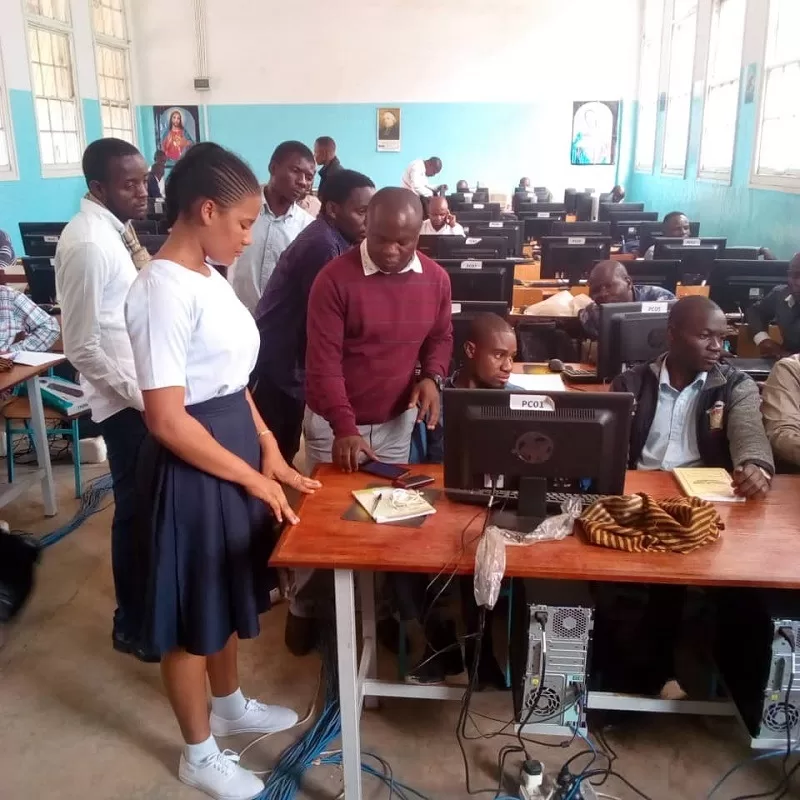
In 2018, the first training session for central-level inspectors was organized in the capital, Kinshasa. However, problems arose with installing the software due to the computers and the versions of the operating systems installed, which were considered very outdated. The computers first had to be updated before Banana Accounting could be installed. This training session generated a great deal of interest and achieved a very high level of satisfaction. For many participants who had never seen or used this accounting software at work, it was a novelty and an innovation
The preparation of complete OHADA financial statements was a feature previously available only in certain software used by large companies. With Banana Accounting, data is entered into the journal using OHADA account numbers to immediately preview the OHADA ledgers and financial statements. It is clear that this new approach significantly accelerates and improves student training.
Feedback from participants on the training content has helped improve the materials used.
Cascade Training
The Ministry of EPST oversees this activity at the national level, but the Educational Provinces are responsible for training in the field. The Democratic Republic of the Congo is a geographically vast country with 60 Educational Provinces under the management of its General Secretariat. It is these provinces that must bear the costs of training provincial trainers. However, not all Educational Provinces have sufficient resources, nor does the Ministry of EPST, to carry out this training process smoothly.
From a policy perspective, it would obviously have been ideal to organize training in all Educational Provinces to give everyone the same opportunities. The alternative was to begin the training in phases in certain provinces and expand it to others as resources became available.
This approach was also chosen to assess the Educational Provinces’ receptiveness to the new vision. It was in this spirit that the training was received with great enthusiasm in the five Educational Provinces of the capital, Kinshasa, and in Lubumbashi in the Educational Province of Haut-Katanga. This sentiment was shared by both the trainers and the leaders of the Educational Provinces.
Completion of Trainer Training
Due to the pandemic and insufficient funding at the end of 2022, the training of provincial trainers was limited to only 9 of the 60 existing Educational Provinces as part of an initial training wave. In these 9 Educational Provinces, provincial trainers had already organized teacher training sessions, following which several schools with equipped computer labs had already introduced the new digital concept into their classroom practices.
The high level of satisfaction among schools and the research findings have proven that the developed method and the cascade training approach used were effective. The Educational Provinces are already aligned with this innovative approach promoted by the Ministry of EPST, and given their positive feedback, it is even more evident that the modest yet necessary contribution needed to organize additional training sessions on the Banana Accounting software would quickly bear fruit.
Thus, during the Easter school break (early April 2023), the Ministry of EPST resumed training provincial trainers in a second wave for the Educational Provinces that had not yet been reached, in order to cover all 60 Educational Provinces spread across the country.
In the meantime, the training module was also expanded. National trainers received a refresher session in February on the new materials and the use of the new version of Banana Accounting.
The module for trainers thus generated keen interest and achieved a very high level of satisfaction, as evidenced by the evaluation at the end of the training. (See also the attached video).
Within a short time, provincial trainers had begun training teachers. This trend is expected to continue in order to consolidate the process of rolling out the digital accounting project in the DR Congo, which is crucial for the professionalization of accounting education in the country, the reform of classroom practices, and the adaptation of accounting and financial management teaching and learning to the world of work.
Adaptation of Regulations
The adaptation of regulations was initiated—that is, carried out—during the first wave of training sessions. Shortly after their capacity-building, provincial trainers led training sessions for teachers at business schools. Immediately following these training sessions held in schools equipped with computer labs, enthusiastic teachers installed the “Banana Accounting” software and began using it in classrooms (during student lessons).
However, the Regulations still stipulated that training, exercises, and exams must be conducted manually. This situation is similar to that in Switzerland, where many schools already had computer labs and some teachers were already using Banana Accounting as a classroom tool, but the Regulations required that exams be conducted manually. To address this situation, teachers were therefore forced, during the final semester of training, to teach students how to make manual entries during exams. It is worth noting that this situation was very frustrating and resulted in a waste of time for both teachers and students.
This prompted the Ministry to amend the regulations, granting schools equipped with computers the authority to conduct training sessions and administer exercises and exams using software. As a result, the Democratic Republic of the Congo became one of the first nations in the world to introduce the ability to conduct accounting tests and exams using software nationwide.
This was a significant milestone, enabling experienced teachers to acquire new skills, learn a new teaching approach, and try a new experience. Both students and parents were highly satisfied, although the main criticism was the lack or insufficiency of computers for students.
It should be noted that in 2019, this training process was suspended due to the onset of COVID-19 and the accompanying health restrictions.
Visits to Kinshasa and Kongo Central
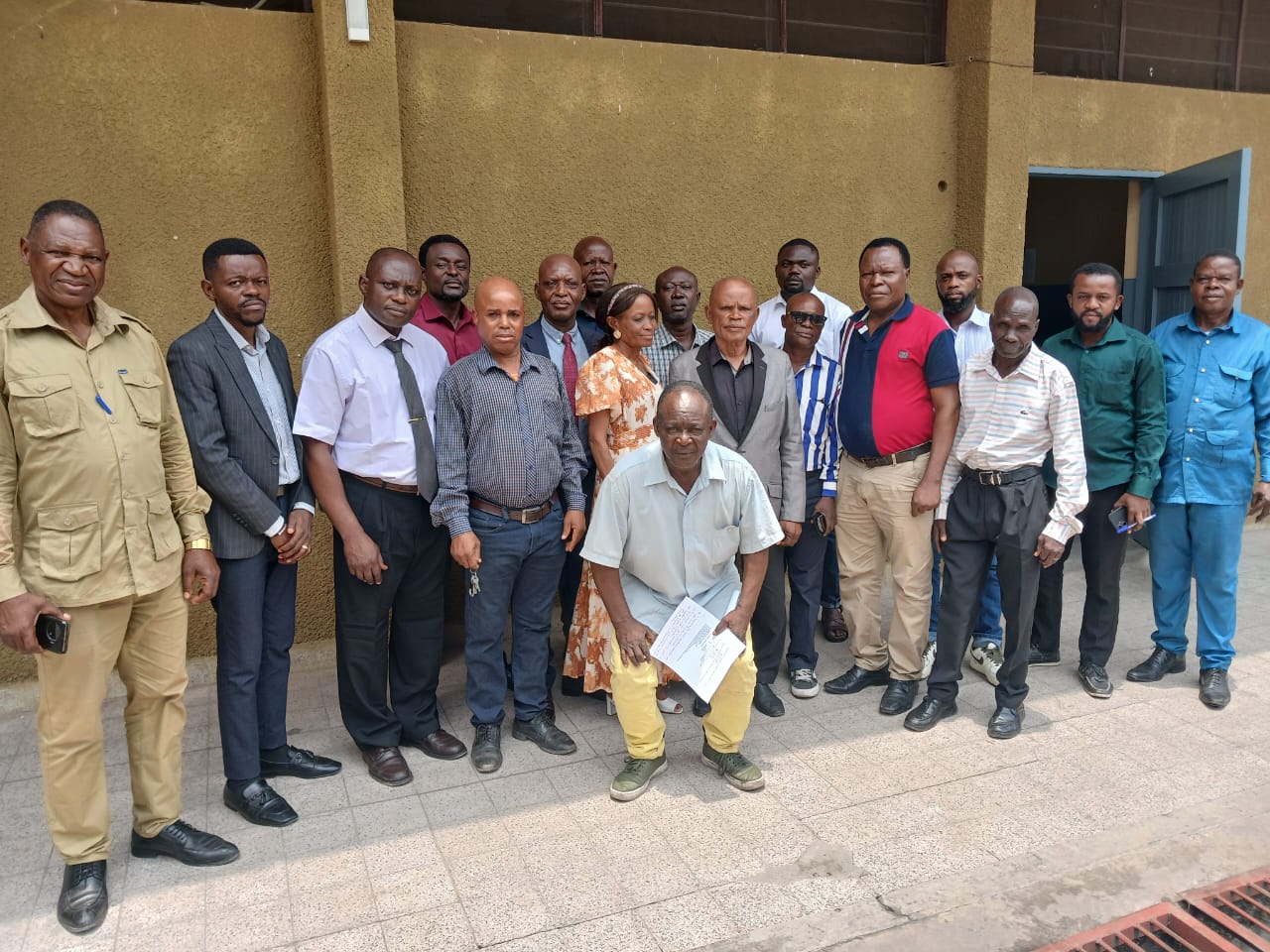
Following the first round of in-person training, remote collaboration was established between the Technical Assistance team and officials from the Ministry of EPST due to restrictions resulting from the COVID-19 pandemic. For this reason, the visit to Kinshasa was not possible again until June 2022. This was an appropriate opportunity for the Technical Assistance team to meet with the Ministry of EPST officials in charge of the project, take stock of the situation, and explore the possibility of moving forward.
At the same time, the Technical Assistance team felt it would also be very beneficial to visit schools using the “Banana Accounting” software in the teaching-learning process and to discuss its use with Provincial Education Inspectors, teachers, and students. Through this exchange, they sought to gather feedback, document issues encountered while using the software, and record suggestions for solutions aimed at improving the implementation of both the training and the curriculum.
It was very helpful to meet with representatives from the Ministry of Basic and Secondary Education (EPST) and provincial inspectors, and to evaluate the software’s application during school visits. The first few days of the school visits had sparked some apprehension among those involved, who believed they were being subjected to pedagogical oversight primarily by the inspectors. This attitude inspired a fairly flexible approach that allowed the visits to achieve the desired results: a “market research” approach, under the pretext that the visit’s findings would enable the software publisher to understand the problems encountered during its use in the field and to gather suggestions for improvement. Instead of asking questions, the technical support team gave the stakeholders in the Educational Provinces (students, etc.) free rein to ask questions and voice their concerns regarding the difficulties they faced. This approach immediately generated a great deal of enthusiasm and made it possible to gather a wealth of information and useful advice.
One of the most frequently voiced concerns was why Banana Accounting had been chosen and whether there was no alternative software that would be used in businesses. These concerns demonstrated just how strongly students felt about receiving training relevant to the working world. Clarifications were provided to address these concerns. First, explanations were given regarding the reasons for choosing Banana Accounting, software tailored for accounting education, followed by information on the existence of other accounting software. However, all such software is based on double-entry bookkeeping and is therefore structured in a very similar way. Once you learn the method and how an accounting program works, it will be easy to apply the same principles to another one. This is similar to someone learning to drive a specific make of vehicle; that training makes it easier for them to drive all other makes.
The general finding was that, during these visits, satisfaction with the software was very high, and complaints from teachers and students were more related to the lack of computers than to the software itself. Obviously, in almost all schools, there were not enough computers for everyone, and computers were rarely available, so that several students had to work in teams using a single computer. Since a single computer lab had to serve several classes in a school, some students did not always have the opportunity to practice using the computer.
Another recurring complaint was about power outages, which drastically reduced practice time and required repeatedly restarting the computer.
Project Validation
In November 2022, a study was published in a scientific journal in the city of Lubumbashi, the capital of the Upper Katanga 1 Educational Province, on the topic: “Integration of Banana Accounting Software in the Commerce and Management Section in Schools of the Lubumbashi 1 Subdivision ." The results of this study were more than encouraging, notably:
Of the 131 schools examined, only 39 had computer equipment;
Of the 39 teachers whose schools had computer equipment, 36 had completed the training organized by the Ministry of Basic and Secondary Education;
74.4% of teachers had already integrated the use of software into their teaching;
Satisfaction was positive among 36 teachers;
37 teachers reported that students had reacted positively to the use of the software;
Complaints were related to the lack of computer equipment;
The software is capable of performing all required functions and has also saved time and improved the verification of completed tasks.
These results demonstrate the effectiveness of the training developed by officials from the Ministry of EPST and the cascade approach used. Most schools with classrooms equipped for digital technology had trained their teachers, thereby enabling them to initiate the use of the OHADA system to install and teach students how to use the “Banana Accounting” software.
Development of a Positive Momentum in Schools
The research, conducted in a more structured and in-depth manner, confirmed the observations made during school visits by the Technical Assistance team. A positive and encouraging momentum was observed in the schools, driven by teacher training and the provision of the software. This momentum is characterized by the following:
Computers that were not in use or rarely used before the training were updated with new operating systems after the training and are now used daily;
They are used not only for teaching accounting but also for other tasks;
Teachers were very pleased to have had the opportunity to be trained on the OHADA system and to use accounting software;
With the use of computers and accounting software, students would have more learning opportunities;
Teachers and school principals were highly motivated to mobilize available resources to try to strengthen and sustain the initiative through (i) the acquisition of computers and (ii) the practice and use of accounting software.
In some cases, the software was used to manage school accounting or simply to record school fees paid monthly by households. This helped improve the financial management of these schools, provide better accountability to families, leverage the benefits of new technologies, further motivate schools, and facilitate the capacity building of their teachers through on-the-job training.
In Switzerland, many accounting professors also assist local small and medium-sized enterprises in the areas of accounting and business management. In the Democratic Republic of the Congo, teachers trained in this new approach have also followed in the footsteps of their Swiss counterparts. They are increasingly being called upon to advise local businesses, particularly in the field of accounting. These local businesses can now count on qualified personnel capable of supporting them and helping them improve their financial management. With the expertise and experience they have gained, they are also able to assess the training needs of these businesses and strengthen their staff’s capabilities in digital accounting to meet those needs.
Comparison of Project Implementation Approaches Between the DRC and Switzerland
Switzerland, where the Technical Assistance is based, is widely recognized as one of the leading countries in education. The company has supported training and provided free accounting software to schools for several years. In many Swiss schools, Banana Accounting is installed and used during training. With an annual per capita income of 80,000 U.S. dollars, Switzerland ranks among the world’s wealthiest countries. Most business schools have had computer-equipped classrooms for years.
The use of software during training, however, was left to the discretion of teachers. However, the exam regulations required the manual method, so classes that used the software during the last semester also had to teach the manual method. It is only starting in the 2023–2024 school year that training for accounting apprentices and certain vocational schools will introduce the requirement to use accounting software during practical training. In any case, there is no coordinated training process in Switzerland; it is up to each school and the teachers to inform, update, and adapt the training materials to the educational context. This situation is similar in other European countries.
Compared to the initiative of a pioneering nation, the method developed by the Democratic Republic of the Congo is clearly very innovative, as it strengthens the skills of teaching staff through a structured, coordinated, highly effective, and low-cost process.
Use of smartphones as an alternative teaching method
Even in Switzerland, where all business schools have computer labs, there is significant participation from many classes and a high number of students. The computer lab is used for various activities, including those related to accounting. Students use computers even outside of accounting class hours, particularly to complete their homework.
With the introduction of mandatory computer training, students’ use of computers will become significant, if not excessive. Students can then install the software directly on their computers and use it to complete exercises, both in class and at home. The BYOD (Bring Your Own Device) approach is clearly the best solution for students and schools. It encourages each student to bring their own computer equipment, enabling them to complete digital accounting exercises as well as those in other management fields, specifically Administrative Correspondence, Commercial Documentation, and Financial Mathematics.
Clearly, the main concern for all stakeholders in the DR Congo is how to ensure that students have access to computers for their practical work. It is clear that students (and their families) lack the financial means to purchase computers. This situation gives officials at the Ministry of Basic and Secondary Education cause for reflection regarding the future prospects of their training in digital accounting. It would be very beneficial for schools to equip themselves with computer labs, a goal that is very difficult to achieve given the country’s limited resources in the current economic climate.
Given the above, smartphones are becoming an increasingly viable alternative, especially as their prices continue to fall. During school visits, few students owned smartphones, but it is likely that the number of students using them will increase rapidly and steadily. Banana Accounting already works on mobile phones, although its use is limited by the small screen size. In this case, it is sufficient to use the app for school exercises, especially since phones are not subject to power outages. The Ministry of Basic and Secondary Education is following this development with interest and intends to prepare for it. With this in mind, teacher training is therefore a crucial step toward ensuring effective instruction. When students have access to devices for practice, the Ministry of EPST will be ready and willing to provide them with the necessary training.
In conclusion, following the first wave of training on the Banana Accounting software in 9 Educational Provinces and its introduction into teaching and learning in their schools, as well as the second wave of training for provincial trainers in the remaining Educational Provinces of the DR Congo that had not yet been reached, the project plans, in the next phase, to continue this process at the school level in the Educational Provinces covered by the second wave of training, with the aim of strengthening their teachers’ capacities and enhancing their students’ learning in digital accounting.
To achieve this, it will be necessary for a monitoring and evaluation mission to be carried out by officials from the central level of the Ministry of EPST. The objective of this mission will be, among other things, to evaluate the training process conducted by provincial trainers with school teachers and thus assess the level of adoption among students, teachers, and school authorities, with a view to ensuring the widespread implementation of this reform in education in the DR Congo.
Within the same framework, activities will also be considered to refocus the design of practical integration scenarios regarding the use of ICT, particularly the “Banana Accounting” software by teachers, which requires support at the national level to strengthen their capacities and acquire new pedagogical skills.
Another concern of the Ministry is not to limit the program solely to schools operating within the national territory, given that the DR Congo’s consulates (in Luanda and Cabinda, Angola, and in Kigali, Rwanda) are organizing schools outside the country’s borders. Children attending these schools should also be included in this innovative program.
Didier KINANO, Head of the Commercial Division