International Day of the Girl: the Congolese Government committed since 2015 to promoting girls' access to school
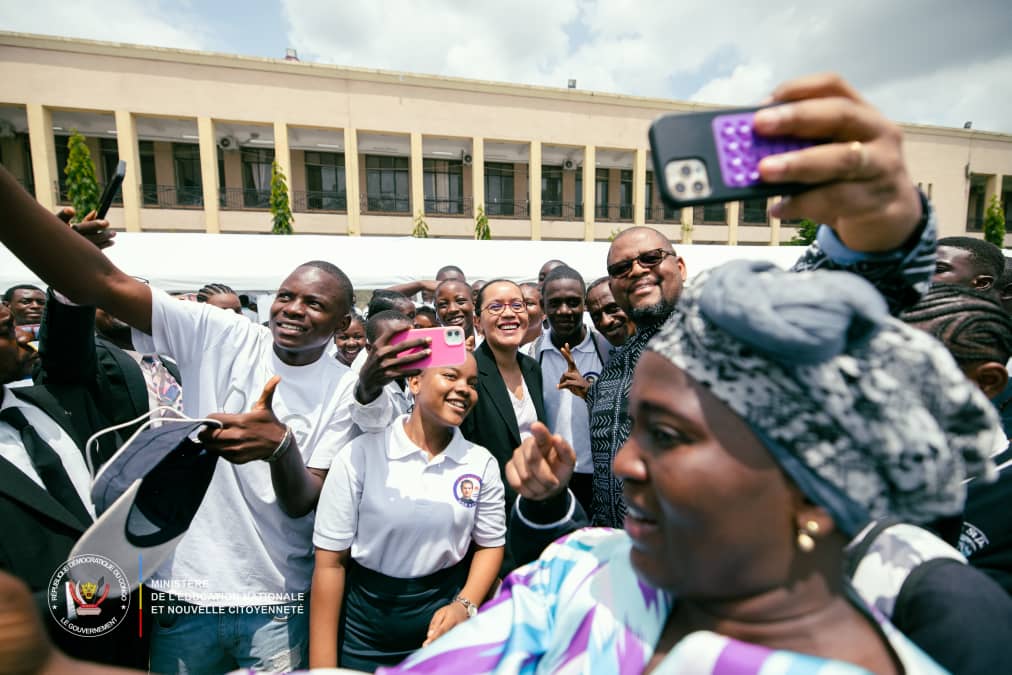
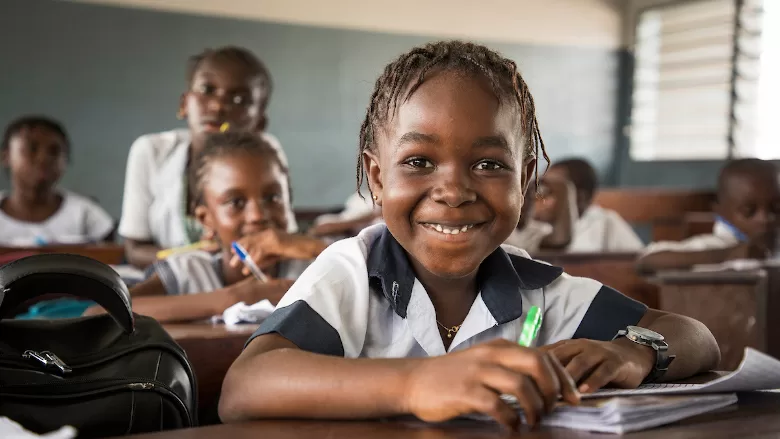
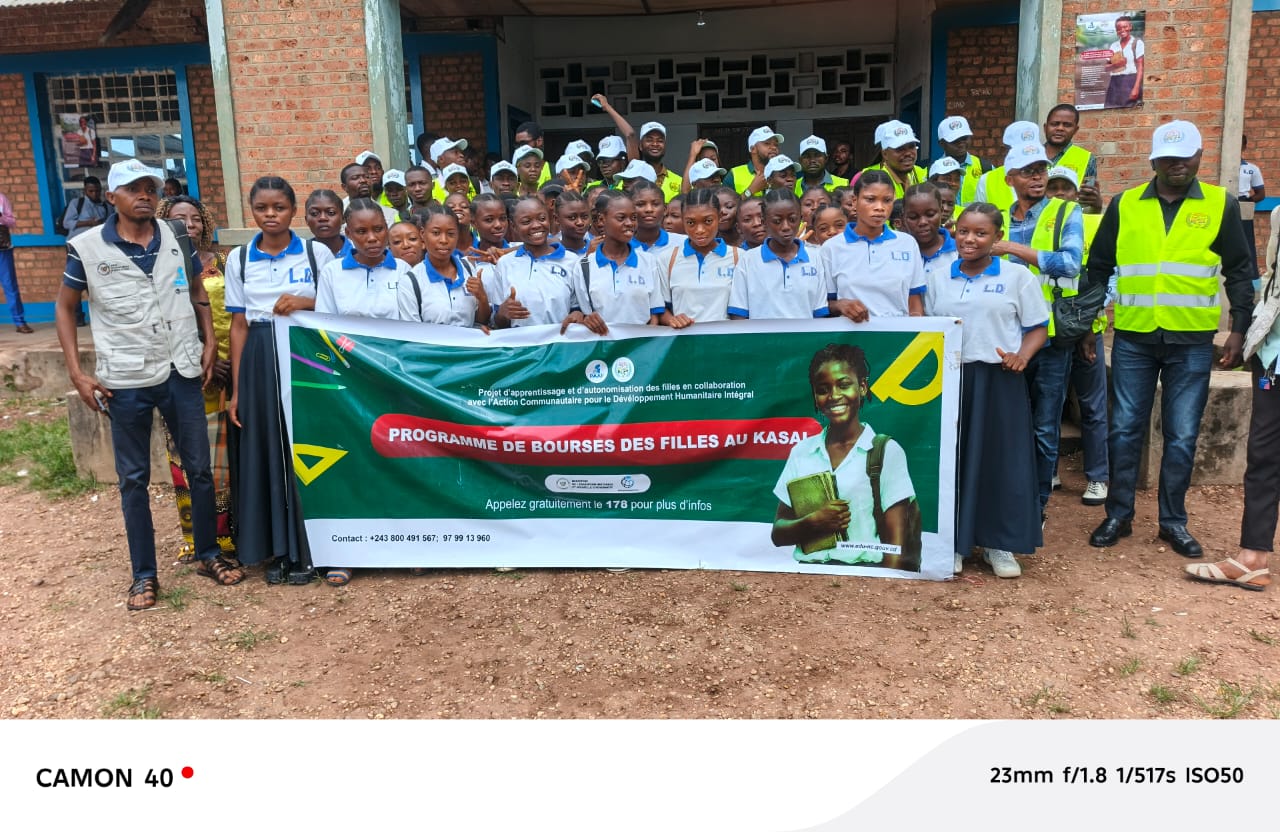
On October 11, 2023, the world celebrated International Day of the Girl. This year’s theme is “Digital Generation, Our Generation.” As it grapples with the challenges of the digital age, the DRC faces the issue of girls’ access to education.
The Communication Management Directorate of the Ministry of Primary, Secondary, and Technical Education (DGC-EPST) highlights the Congolese government’s efforts to increase the number of girls in school.
Among these efforts, we can notably cite the implementation of the National Strategy for Girls’ Education in 2015 and the introduction of free primary education in 2019.
The Strategy for Girls’ Education
In 2015, the Government of the DRC implemented the National Strategy for the Promotion of Girls’ Education in the DRC (SNPSF).
The mission of this strategy was to lead initiatives aimed at reducing the gap between girls and boys by promoting their access to and retention in school.
According to this document, the factors hindering girls’ enrollment are numerous. Among them are, notably, an inadequately trained, predominantly male, and aging teaching staff; financial barriers; girls’ labor; age of school entry; grade repetition and dropout rates; restrictive family and sociocultural norms affecting girls’ academic performance; early marriage and pregnancy; and unsafe school environments, among others.
With this in mind, the strategy proposes a phased approach, targeting first and foremost the provinces where indicators of girls’ access to and retention in school are the lowest.
It builds on government guidelines and the achievements of programs and projects designed to remove the barriers girls face.
Specific actions should therefore be taken, including the creation of a supportive environment and an integrated, cross-sectoral approach.
Free Primary Education
Free primary education is a provision contained in Article 43 of the DRC Constitution.
Since its effective implementation in 2019 with the inauguration of President Félix Tshisekedi, free primary education has enabled several million children to return to school.
This increase in children’s access to school is all the more noticeable as many prominent figures have highlighted it.
This is the case, for example, with Victoria Kwakwa, World Bank Vice President for East and Central Africa. On October 10, she congratulated the government, through Ministers Nicolas Kazadi and Aimé Boji, of Finance and Budget respectively, on the success of free primary education.
During her visit to the DRC last June, Victoria Kwakwa noted that the average class size had risen from thirty to over 80 students.
In an interview marking the DRC’s 63rd anniversary, President Félix Tshisekedi asserted that this policy is his greatest achievement.
“It is a great joy to have learned that many children, especially young girls, have been able to return to school,” said Félix Tshisekedi.
It should be noted that, according to UNESCO, this day draws “attention to the need to address the challenges girls face and to promote girls’ empowerment and the realization of their fundamental rights.”
Bruno Nsaka and Maryella Sula