Kananga: End of the first phase of training for supervisors, a sense of almost accomplished duty
It was under skies wavering between rain and the dry season that the first phase of the training on educational leadership for elementary school principals, held in Kananga, came to a close.
An uncertain climate, but one that did nothing to dampen the determination of the supervisors from the Kasaï Central 1 educational province, nor that of the two trainers who had come from Kinshasa: Rémy Lokonda Bokando, Senior Inspector, and Christine Mbelani Masaka, Deputy Senior Inspector, both senior officials of the National Primary Teacher Training Service (SERNAFOR Primaire), under the supervision of the Ministry of National Education and New Citizenship (EDU-NC).
A final busy and structured day
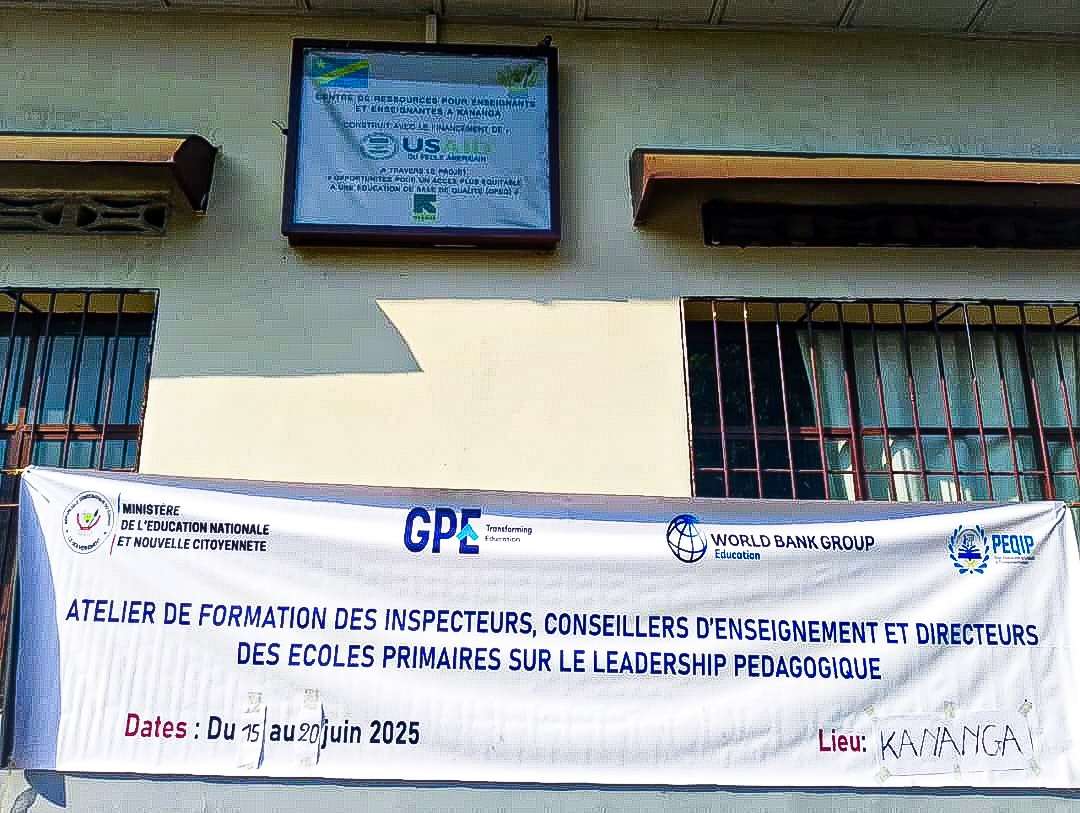
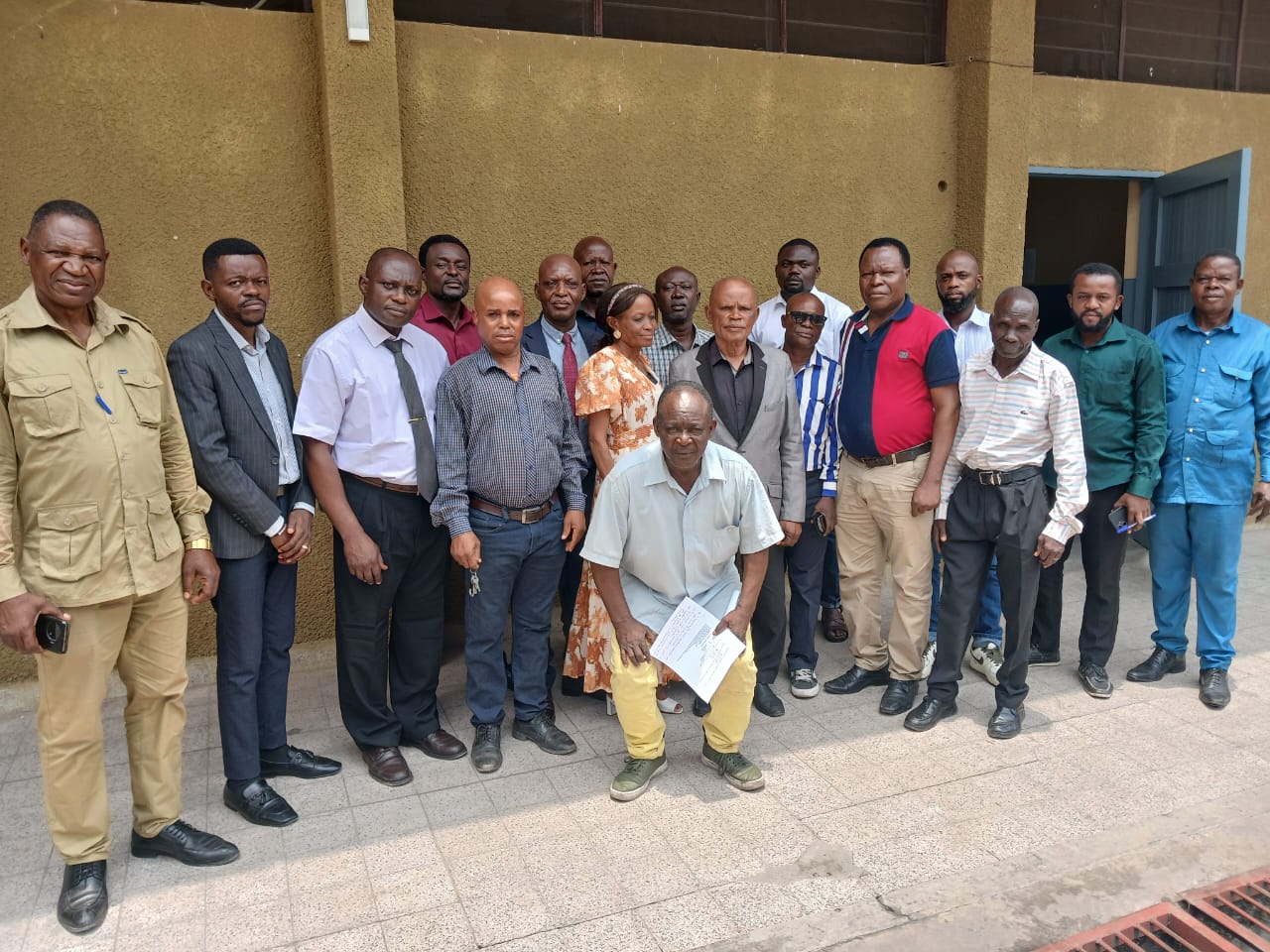
It is 8:45 a.m. at the Kananga Educational Resource Center (CREPKA). Thirty inspectors and educational advisors take their seats in Room 1. The trainers, already present, open the session. On this fifth day of training, the module is drawing to a close. Two final activities remain to be carried out, out of the 22 planned.
As every morning, the day begins with a reading of the previous day’s activity report, followed by amendments and its adoption.
The rapporteur’s voice barely covers the hum of the generator powering the complex, but everyone remains attentive. A participatory dynamic takes hold immediately, under the trainer’s guidance. The trainer has the report adopted by a show of hands, to applause, once all comments have been addressed.
Two final activities marked by active participation
Next comes the time to tackle the last two activities of the training. Senior Inspector Rémy Lokonda Bokando, module in hand, announces: “Let’s now move on to the penultimate activity of our training.”
The participants pay even closer attention.
To encourage their involvement, he engages them with interactive questions, prompting them to formulate the topic to be discussed themselves.
One thing leading to another, the discussion converges: “School asset management,” he finally announces, specifying that this is the seventh topic of the training, titled “The School Principal’s Leadership in Asset Management.”
After a brief introduction, he presents the participants with a series of reflective questions, then divides them into working groups. Each team actively engages with the proposed topics.
About 45 minutes later, the groups return to the room. Two representatives from each group take turns speaking to present the results of their discussions. This is followed by a lively and interactive exchange: comments, additions, and observations come thick and fast, both from the other groups and from members of the teams themselves. The trainer skillfully moderates the discussion, giving everyone a chance to speak, and then provides a clear and structured summary, highlighting the key takeaways for the benefit of all participants.
This participatory model also guides the presentation by Ms. Christine Mbelani Masaka, who is leading the final activity of the training’s last theme. With an approach that is as fluid as it is rigorous, she introduces the issue of the school principal’s cultural and athletic leadership.
Gradually, she steers the discussion toward the organization of extracurricular activities, in connection with the principal’s role as a motivator in school life.
As with the previous activity, the exchanges are lively, the participants fully engaged, and the conclusions reached to everyone’s satisfaction.
Evaluation and Outlook
The day continues with closing activities. A post-test is administered to assess learning outcomes, compared to the pre-test conducted on the first day. Responses are quick, and corrections are immediate. The atmosphere remains warm, despite a palpable tension due to the imminent end of this phase.
Then comes the overall evaluation of the session: participants highlight best practices to be continued and point out areas for improvement. In their summary remarks, the trainers emphasize the tools needed to effectively facilitate future training sessions. This is followed by the reading of the final report and words of thanks from the participants.
Practical arrangements for the next steps are also defined: delivery of the modules, provision of materials, and logistical distribution. Deployment to the principals’ training sites is imminent.
Focus on training the principals
Starting this Saturday, the 30 trainers from the Kasaï Central 1 provincial core team will take over to train 770 public elementary school principals, distributed across urban and rural subdivisions. This initiative, led by SERNAFOR Primary, is part of Component 2.1 of the PEQIP (Project for the Improvement of Primary Education Quality), which aims to strengthen grassroots educational leadership to sustainably improve classroom practices.
Cellcom PEQIP