Actualités
16 April 2026
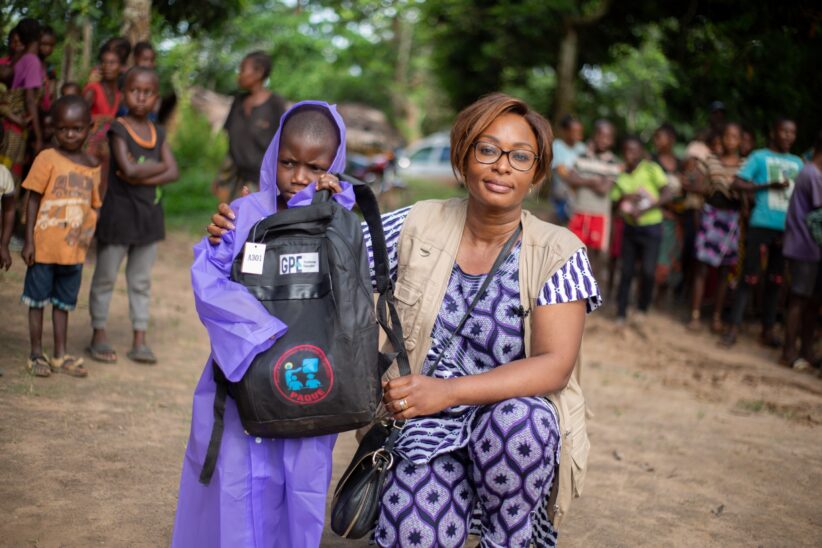
As part of the implementation of the Plan for Indigenous Peoples (PPA) developed by the PAQUE project in accordance with operational policies on social protection, experts from the project and the Ministry conducted a mission in the Equateur 1 Bikoro Educational Province from November 17 to 28, 2022, during which they distributed school kits to students from Indigenous Populations (IP).
This mission is part of the awareness-raising efforts regarding the implementation of the Plan for Indigenous Peoples (PPA) under the Project for the Improvement of Education Quality (PAQUE). Improving learning conditions in primary school has been PAQUE’s ultimate goal. Without neglecting its other interventions, which are equally commendable, the focus of PAQUE’s implementation has been, as its name suggests, improving the quality of education. Not just for one category of children, but for all children, including those from disadvantaged groups such as Indigenous peoples.

Indigenous populations live in 17 of the 18 provinces that make up PAQUE’s coverage areas, often on the margins of their Bantu neighbors. Three groups among them have been identified: the Twa, Cwa, and Bambenga. PAQUE then undertook to develop the PPA to clearly define its intervention. Among other things, it aimed to:
Based on the PPA developed in August 2022—building on the initial effort that led to the establishment of the Strategic Framework for the Preparation of a Pygmy Development Program in 2019—it is resolved that PAQUE shall support the education of Indigenous children by providing school supplies and kits such as uniforms, backpacks, etc.
Joy was evident on the faces of the children and their parents, who shared moments of happiness with experts from MEPST and PAQUE. Indeed, there is joy in embracing the path of quality education that builds the community and its citizens. The future of the DRC is also being shaped by PA children.
As a reminder, Indigenous Peoples are distinct social and cultural groups sharing collective ancestral ties to the natural resources and lands they discovered or to which they migrated. They have suffered from marginalization and discrimination, living in danger and constant conflict with their Bantu neighbors. Furthermore, from a legal standpoint, all Indigenous Peoples in the Democratic Republic of the Congo are full-fledged Congolese citizens, enjoying the same rights as the Bantu, in accordance with the Constitution of February 18, 2006, as amended by Law No. 11/002 of January 20, 2011.

The PAQUE project brought a smile to their faces, as evidenced by the warm welcome they gave it. The expectations of the indigenous communities consulted as part of the PAQUE project were centered on a positive impact. They noted that preschool-aged children between 3 and 5 years old will benefit from a strengthened early childhood education system, primary school students will receive free textbooks, students will benefit from better education thanks to the training of inspectors, school principals, and teachers, and teachers in the 1st, 2nd, and 3rd grades of primary school will be trained in reading instruction.
Before concluding on December 31, 2022, PAQUE ensured that its collaboration with the PAs left a very positive mark by organizing this awareness campaign and the distribution of school kits. Its two deliverables, the Strategic Framework for the Preparation of a Pygmy Development Program and the Plan for Indigenous Populations, which it provided to the MEPST, have paved the way to ensure that these vulnerable social groups receive support so that the education system can open up the future for their children and instill in them the sense of citizenship necessary for the development of the DRC.
Glodi MBOMA and Fleury DALA
Filter by structure or document type to find the right content.



For any report or information related to national education and new citizenship, call 178