Actualités
16 April 2026

 “The ideal here is to manage staffing levels in both schools and administrative offices not only at the national level but also in the provinces. There should be no overlap; everyone within the EPST, like pieces of a puzzle, should have a clear idea of what they need to do,” said Godfrey Talabulu.
Augustin Kalume, division head at the Directorate of Teacher Training and Administrative Offices (DIFORE-BG)—the EPST unit overseeing this reform—emphasized the need to streamline staffing and structures within schools and administrative offices.
According to the field study, there has been an “increase in school administrative offices and staff in these offices, excessive staffing levels in administrative offices, a mismatch between job profiles and requirements, the creation of administrative offices in violation of relevant standards, and poor service quality,” revealed Augustin Kalume.
“The ideal here is to manage staffing levels in both schools and administrative offices not only at the national level but also in the provinces. There should be no overlap; everyone within the EPST, like pieces of a puzzle, should have a clear idea of what they need to do,” said Godfrey Talabulu.
Augustin Kalume, division head at the Directorate of Teacher Training and Administrative Offices (DIFORE-BG)—the EPST unit overseeing this reform—emphasized the need to streamline staffing and structures within schools and administrative offices.
According to the field study, there has been an “increase in school administrative offices and staff in these offices, excessive staffing levels in administrative offices, a mismatch between job profiles and requirements, the creation of administrative offices in violation of relevant standards, and poor service quality,” revealed Augustin Kalume.
 He also addressed the potential impact of this streamlining on free primary education.
“Since the government has eliminated parental contributions at the primary level—contributions that used to account for up to 73%,” he explained, “it is now obligated to streamline its resources to effectively cover the costs of schools, primary school teachers, and the operating expenses of schools and administrative offices,” he added.
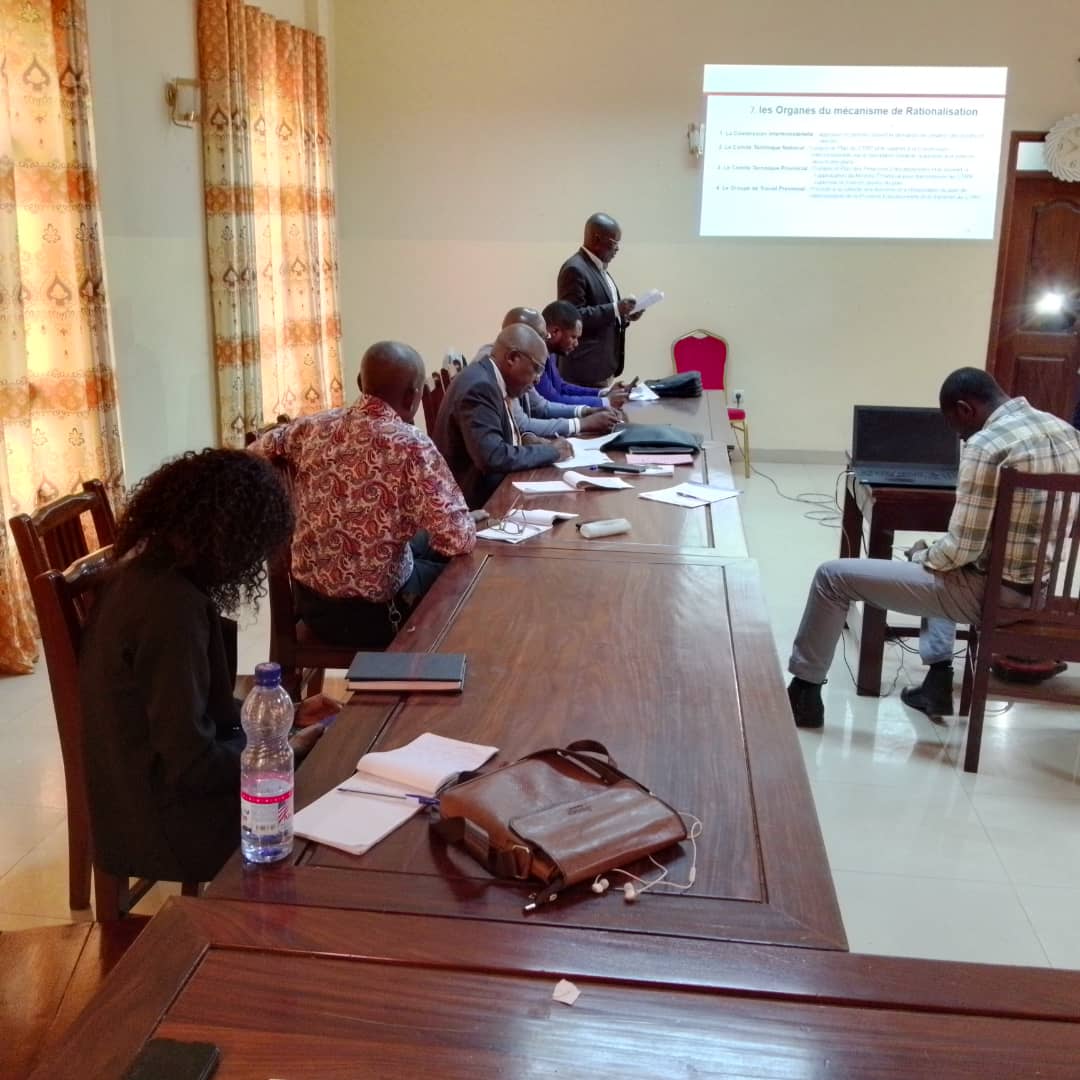
It should be noted that this series of awareness-raising sessions on the streamlining of schools and administrative offices spans four days and is initially aimed at the directors and heads of central services at the Ministry of Basic and Secondary Education, national coordinators, unions, parent committees, as well as technical and financial partners.
Bruno NSAKA
He also addressed the potential impact of this streamlining on free primary education.
“Since the government has eliminated parental contributions at the primary level—contributions that used to account for up to 73%,” he explained, “it is now obligated to streamline its resources to effectively cover the costs of schools, primary school teachers, and the operating expenses of schools and administrative offices,” he added.
It should be noted that this series of awareness-raising sessions on the streamlining of schools and administrative offices spans four days and is initially aimed at the directors and heads of central services at the Ministry of Basic and Secondary Education, national coordinators, unions, parent committees, as well as technical and financial partners.
Bruno NSAKA
Filter by structure or document type to find the right content.




For any report or information related to national education and new citizenship, call 178