Village de la science: Students in Kinshasa bring science and technology to life through scientific activities
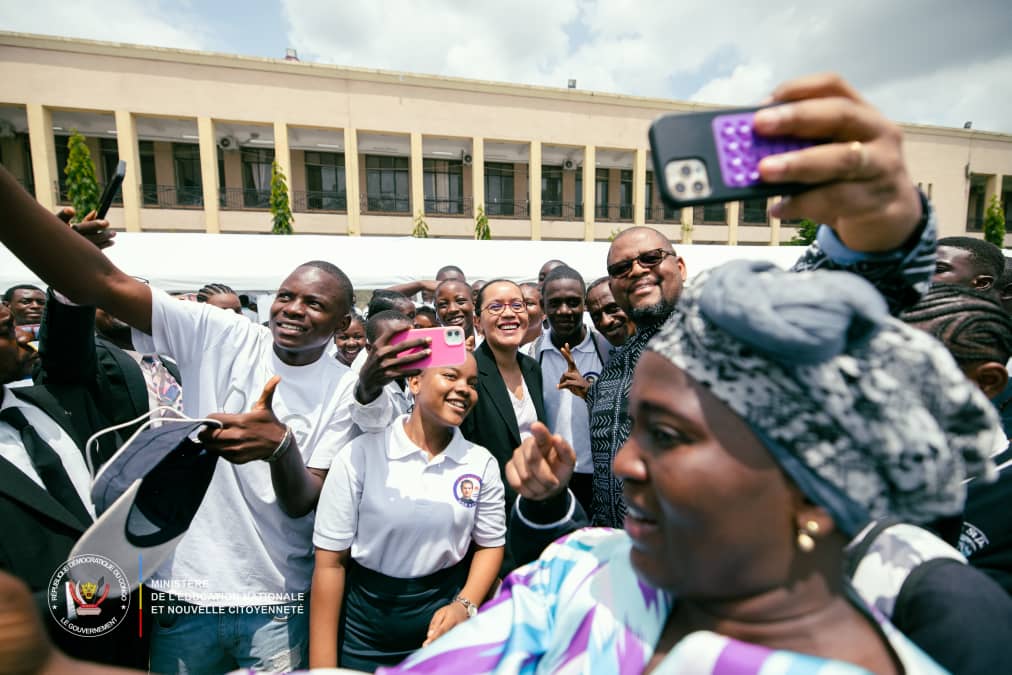
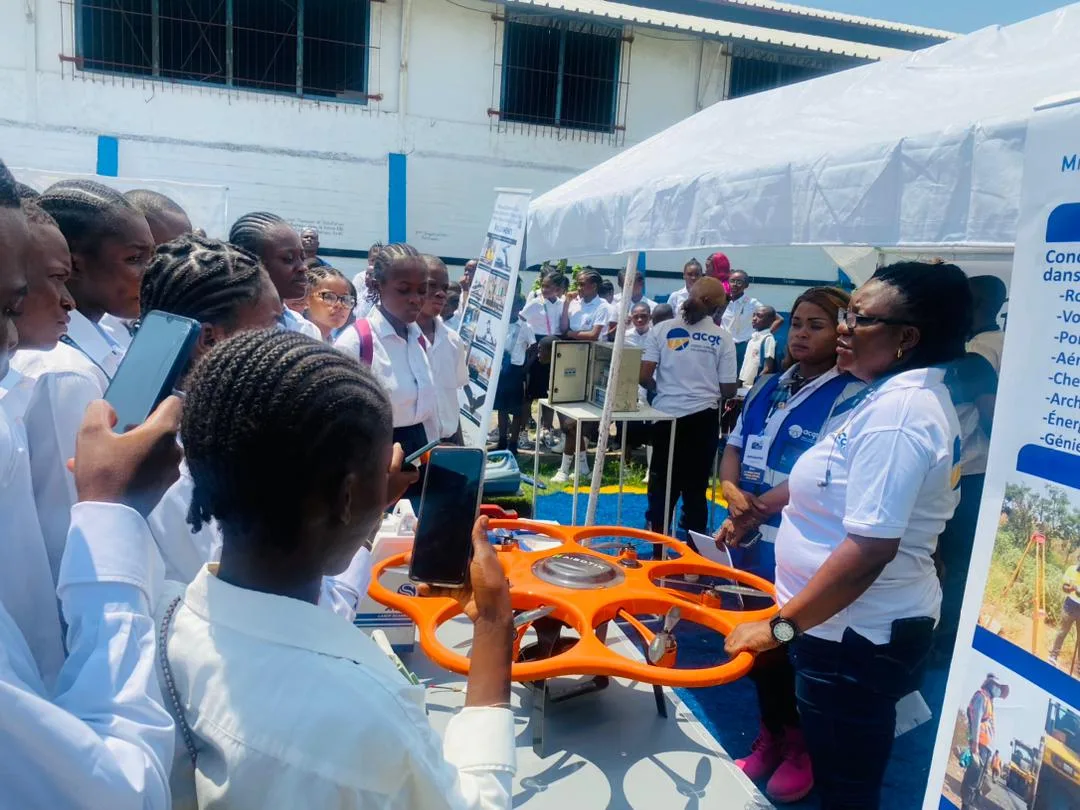
The Science Village has been taking place since Tuesday, April 9, 2024, in Kinshasa as part of Science and Technology Week. Bringing together students from various schools in the capital, this event, held on the esplanade of the Gombe 2 Institute, has three objectives: to make science and technology accessible to young people and the general public; to promote Congolese and African knowledge and expertise; and to inspire future careers.
Two main activities marked this event: exhibitions by various partners in the form of research centers and activities led by the students.
Stationed at booths according to their respective academic disciplines, the students from the Gombe 2 Institute and Liziba High School who were running the exhibition each explained their passion for science.
Ndzadi Babawu, a second-year science student at the Gombe 2 Institute and one of the facilitators at the biology booth, said she focused her outreach on the genetic code.
According to her, living beings (both humans and animals) can have the same genetic code but exhibit different traits and morphologies. She asserts that this is due to the process of chromosome and allele shuffling.
“We explained why there are often differences in traits or morphology between siblings, even though they were born to the same parents. This is because of a process of chromosome and allele shuffling. We are different because of the arrangement of our DNA bases," she added.
For their part, students Kassil Deo and Atsain Ruth, from Gombe 2 Institute and Liziba High School respectively, raised awareness about malaria and sickle cell disease prevention.
"We wanted to combine malaria and sickle cell disease because we noticed that in various settings, especially in Africa, people with the AS genotype fare better in areas where malaria is present than those with the AA or SS genotypes, since they are more resistant to mosquito bites...The advice I gave to the young people is to get tested to find out their blood groups and sub-groups so they can choose their partners more wisely. You can’t be AS and marry someone who is also AS, because you’ll give birth to children with abnormalities,” explained Atsain Ruth, a student in the Literature track at Liziba High School.
The students who led the science and technology workshops were trained for 10 days during the Easter break, according to Ms. Raïssa Malu, Executive Director of Investing in People and initiator of Science Week.
"Since we want to inspire future scientists and make science accessible to everyone, we have to start from the very beginning—that is, the goal is to work with students, because that’s where we need to spark an interest in science," added Ms. Malu. She continued, "Thanks to the Ministry of Education, we invited schools from all the municipalities of Kinshasa, which took turns visiting. We must start with our youth in elementary and secondary school to foster a different way of doing things; after that, they will become excellent students and outstanding adults," said Raïssa Malu.
It should be noted that the visitors, who were primarily students, were educated on various subjects, including the advantages and disadvantages of artificial intelligence; innovations and digital technology, etc.
This 11th edition of Science Week is taking place across two countries and continents: from April 6 to 10, 2024, in Kinshasa and in several provinces of the Democratic Republic of the Congo (DRC) throughout the month of April, before moving to Brussels from April 27 to 29, 2024.
Paola Mawete and Willy Kambulu