
Actualités
16 April 2026

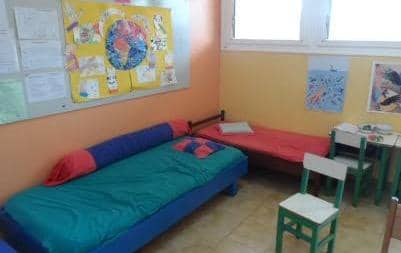
The world celebrates nurses on May 12 every year. This year, the day will be celebrated under the theme “Nurses: Our Future.”
This is an opportunity for the editorial team of the Communication Management Directorate of the Ministry of Primary, Secondary, and Technical Education (DGC-EPST) to reflect on the role of nurses in every school.
Understanding the role of the school nurse is essential to ensuring the coordination of care, particularly when a child is sick or has a disability.
Furthermore, there is a recognized link between health and learning, well-being, and students’ academic success.
It is in this spirit that the DRC government has designated early childhood education as one of the priority areas of its education policy.
The Congolese government has made available a compendium of standards for preschool education in the DRC to provide children with a quality education for holistic and harmonious development and to ensure they are well-prepared for and successfully integrated into primary education, in accordance with the Framework Law on National Education of February 11, 2014.
Standards 15, 17, 18, 20, 21, 22, and 23 contained in the compendium of preschool education standards highlight the close links between health and education, on the one hand, and the importance for children to learn in a healthy, protective, safe, and secure environment, as well as the roles of educators in protecting children from all forms of violence and abuse in the school setting.
It should be noted that the majority of chronic and non-chronic illnesses and injuries that occur at school—such as scrapes, headaches, or stomachaches—can be treated by a school nurse.
This is why every school needs to have a health room or hire a teacher trained in first aid for young children.
Having a school nurse promotes children’s physical, mental, and environmental health, in addition to preventing communicable and non-communicable diseases.
Immediate care following a child’s or teacher’s illness or discomfort can be vital in some cases and prevent the worst from happening.
After receiving first aid, the patient may remain in the infirmary to rest if their condition stabilizes; if it does not improve, the nurse should contact the child’s parents or advise them to see a doctor.
For children with chronic conditions or illnesses, or those undergoing specific treatment, it is important to inform the school nurse, teachers, or the school principal so they can adapt to the child’s situation.
Medications are stored in the infirmary along with a copy of the doctor’s prescription and a parental authorization form (template attached) allowing the school to administer the medication to the child at school. Ask the child’s doctor for the dosage and timing of the medication and provide the medication to the school in its original, labeled container.
Parents must ensure that the child is well enough to attend school, meaning they do not have a fever; if necessary, parents must provide a medical certificate attesting that the sick child poses no danger to other students and may now return to class.
According to the aforementioned standards for preschool education, it is also stipulated that the school must have a health guide to protect young children from various diseases or microbial or seasonal infections.
Furthermore, school officials must regularly remind students of hygiene precautions in the school environment and the importance of childhood vaccinations.
In the case of a visible issue, such as a rash or conjunctivitis, that has already been examined by the child’s doctor, parents are advised to inform the school nurse or the school administrator so that if a teacher notices something unusual in the child, they can send the child to the infirmary to avoid disrupting the young child’s class time.
In the event of an injury or illness that limits the child’s physical and sports activities, parents must inform the school so that the child may be excused, or so that the school can adapt certain lessons, offer alternative activities during physical education class, or provide special supervision during recess.
It should be noted that the school’s primary mission is not to combat this or that problem, but rather to educate the citizens of tomorrow and enable everyone to succeed for a better future.
Paulin NGENDA
Filter by structure or document type to find the right content.




For any report or information related to national education and new citizenship, call 178