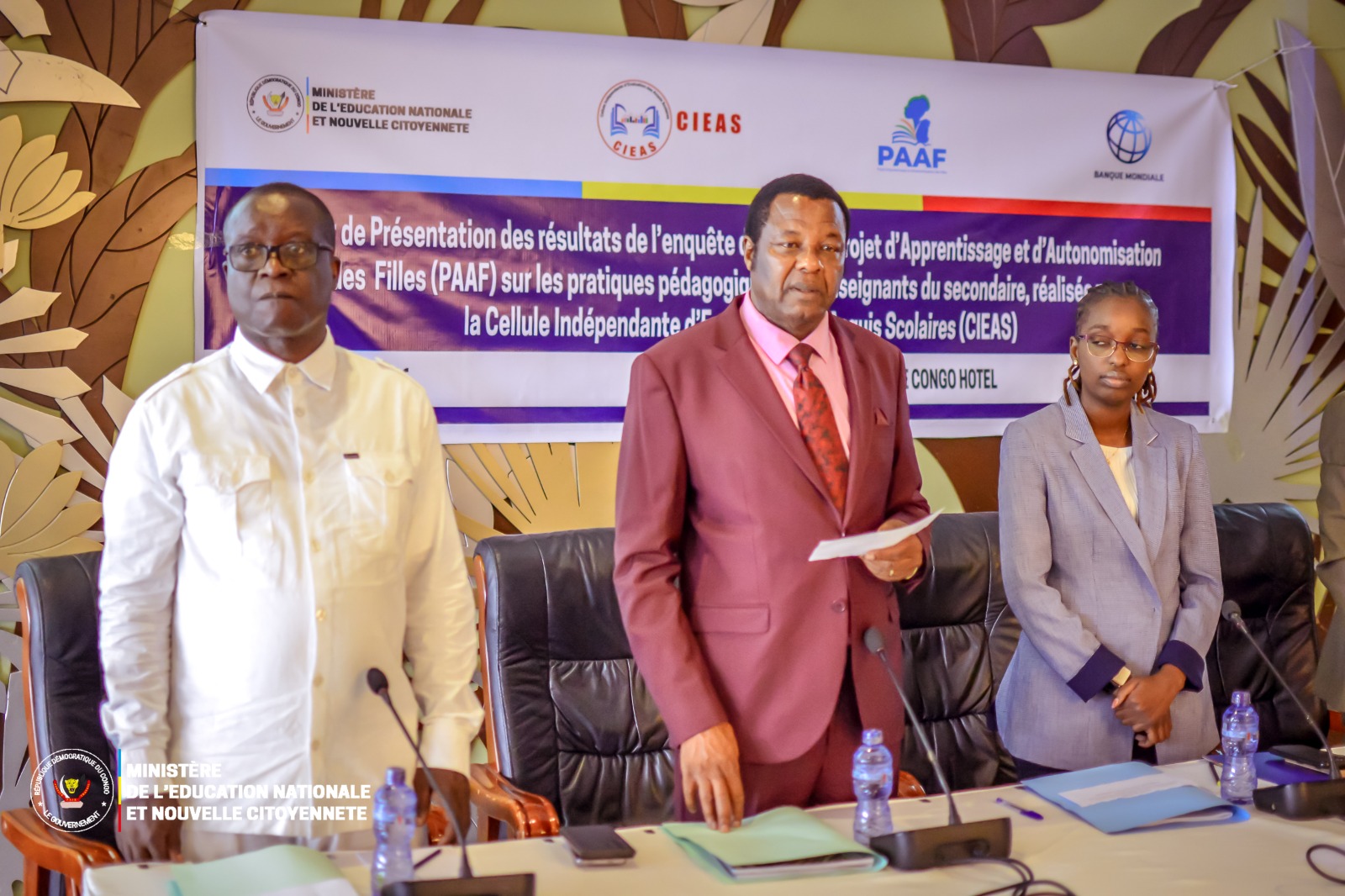
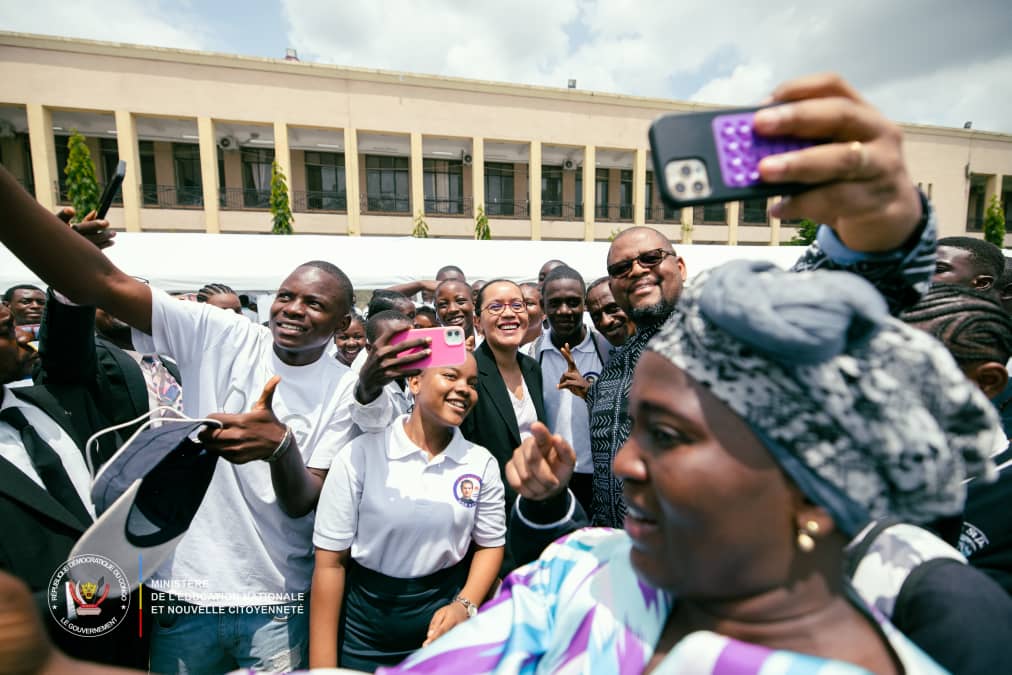
Celebration of March 08: Equality begins at school. Together, let's make March 8, 2025 a decisive moment for girls' education in the DRC [Tribune de la Minetat Raïssa Malu].
On March 8, 2025, the world celebrates International Women’s Day under the theme “For ALL women and girls: rights, equality, and empowerment.” For us in the Democratic Republic of the Congo, this date is an opportunity to remind ourselves that girls’ education is much more than a matter of social justice. It is a matter of development, stability, and prosperity. As a woman, a scientist, and a minister, I recognize both the magnitude of the challenges and the imperative to act.
A DIFFICULT CONTEXT THAT REQUIRES DETERMINED ACTION
The educational situation for girls in the DRC remains a cause for concern. According to the Demographic and Health Survey III (DHS-DRC III, 2023–2024), only 59% of women aged 15 to 49 are literate, compared to 86% of men, highlighting a significant gender disparity in access to education. This survey also reveals a notable disparity in school attendance rates specifically for girls, with 81% at the primary level compared to only 55% at the secondary level, illustrating a significant dropout rate between these two levels of education.
Provinces particularly affected by this phenomenon include North Kivu, South Kivu, Ituri, and Kasai, where security instability and a lack of adequate school infrastructure exacerbate school dropout rates among girls (EDS-DRC III, 2024). Between 30% and 40% of girls drop out of school after primary school, mainly due to chronic poverty, a lack of adequate school infrastructure—particularly the absence of sanitary facilities suitable for adolescent girls—and long distances to travel.
EDUCATION: A DRIVER OF EMPOWERMENT AND DEVELOPMENT
Educating a girl means offering her prospects for the future and giving her the means to achieve economic independence. Today, the representation of girls in science and technology fields remains low, requiring stronger action to promote their access to and retention in these disciplines. Gender stereotypes continue to steer young girls toward fields that are less economically valued, thereby limiting their career opportunities. Encouraging girls to pursue careers in science, mathematics, and entrepreneurship is a strategic priority for the country’s development.
Access to financing also remains a major challenge. Less than 15% of women have access to bank loans to start a business, which limits their entry into the workforce after graduation. The Congolese government is actively working with its partners to implement innovative solutions, including microfinance programs and entrepreneurship training for young female graduates.
FREE SCHOOLING: A MAJOR ACHIEVEMENT TO BE CONSOLIDATED
Since its introduction, free primary education has led to a significant increase in enrollment, particularly among girls. Although this policy marks a historic turning point, it does not fully resolve the challenges associated with sustainable schooling. Overcrowded classrooms, a shortage of qualified teachers, and inadequate infrastructure remain significant obstacles.
In response to these challenges, the government has launched the Primary Education Quality Improvement Project (PEQIP), specifically focused on building and rehabilitating primary schools equipped with adequate infrastructure, including separate restrooms for girls, particularly in rural areas. This program thus aims to improve conditions for students, reduce absenteeism rates, and facilitate the transition to secondary school.
CONCRETE ACTIONS TO GUARANTEE EQUALITY IN SCHOOL
The government remains fully committed to ensuring equitable and inclusive education for all Congolese girls. To directly support vulnerable girls and encourage their continued enrollment, the Girls’ Learning and Empowerment Project (PAAF) funds scholarships, supports the reintegration of teenage mothers, and trains teachers on gender equality, particularly at the secondary level where dropout rates are critical.
Furthermore, recognizing that food insecurity is a major barrier to school attendance, especially in rural areas, the Ministry is finalizing, at the request of the President of the Republic, the National School Feeding Strategy. By guaranteeing at least one meal a day for students, this strategy aims to sustainably improve school attendance, particularly for girls from the most disadvantaged backgrounds.
Finally, the Ministry’s 2024–2029 Five-Year Plan emphasizes inclusive and equitable education. It includes specific awareness-raising initiatives targeting students, teachers, and communities to highlight the importance of girls’ education, while encouraging their active participation in civic and entrepreneurial initiatives. The goal is clear: to make school a safe and equitable space where every girl can fully develop her potential without any discrimination.
THE ACTIVE CITIZENSHIP CAMPAIGN: A CATALYST FOR GIRLS’ EQUALITY AND EMPOWERMENT
Equality between girls and boys is not built solely through educational policies and appropriate infrastructure. It is also forged in mindsets, social practices, and civic engagement, starting from a very young age. It is in this spirit that the Active Citizenship Campaign, led by the Ministry, plays a central role in promoting girls’ rights and building a more just and inclusive society.
On March 8, 2025, this campaign takes on special significance by highlighting the issues of equality and empowerment for girls. In schools, young girls are encouraged to speak up, thereby asserting their active role in building responsible citizenship. Too often confined to secondary roles, they must be encouraged to express their opinions, defend their rights, and fully engage in public life.
Equality begins in the classroom, but also in the way educational content is delivered. Through the Active Citizenship Campaign, educational modules on girls’ rights, the fight against discrimination, and the importance of civic engagement are integrated into teacher training and school activities. The goal is to create a culture of sustainable equality, where younger generations grow up with a more inclusive vision that respects everyone’s rights.
A key component of the campaign involves establishing girls’ clubs in schools—citizenship clubs where both girls and boys are educated about the values of respect, leadership, and social responsibility. These spaces will enable girls to build their self-confidence, take initiative, and develop leadership skills—essential qualities for breaking down gender barriers and accessing decision-making roles in Congolese society.
The campaign also encourages girls’ engagement in community initiatives, particularly through social and environmental projects. Education must not only be a lever for individual empowerment but also a driver of collective transformation. Encouraging girls to invest in the development of their communities means giving them the tools to become agents of change.
NATIONAL AND INTERNATIONAL MOBILIZATION: A PRIORITY FOR PEACE AND DEVELOPMENT
Girls’ education is a national priority, but it is not solely the government’s responsibility. The international community, the private sector, civil society, and the media must play a crucial role. Businesses can get involved by funding scholarships, offering vocational training tailored to young girls, and integrating more women into technical and industrial fields.
Investing in girls’ education is investing in peace and stability. A country that educates its girls is a country that is building a sustainable future. Every child has the right to education, regardless of gender, background, or place of residence. War must not steal our girls’ future. With this in mind, the Ministry is working on the National Strategy for Education in Emergency Situations to ensure that girls affected by conflict can continue their schooling. This strategy provides solutions tailored to crisis contexts, such as temporary schools, accelerated and distance learning courses, and protection measures specific to girls.
On this International Women’s Day, March 8, 2025, we reaffirm our call for an immediate end to the Rwandan occupation and the withdrawal of the M23 from the occupied areas. We must guarantee every Congolese girl the right to learn, to thrive, and to build her future.
Equality begins in the classroom. Together, let’s make March 8, 2025, a turning point for girls’ education in the DRC.
WE ARE NATIONAL EDUCATION. WE ARE SHAPING OUR CHILDREN’S FUTURE. WE ARE BUILDING THE NATION.
![Celebration of March 08: Equality begins at school. Together, let's make March 8, 2025 a decisive moment for girls' education in the DRC [Tribune de la Minetat Raïssa Malu].](https://edu-nc.gouv.cd/wp-content/uploads/2025/03/IMG-20250308-WA0118.jpg)