Actualités
16 April 2026
In response to the alarming rise in misconduct observed on social media—misinformation, public insults, hate speech, manipulation of public opinion, and incitement to division—President Félix Tshisekedi, during the 80th regular meeting of the Council of Ministers held on February 27, 2026, at the African Union City, called for the Digital Code to be made a genuine regulatory instrument in the service of national cohesion.
The Head of State emphasized that digital platforms, which have become spaces of massive influence, must not be allowed to become lawless zones. While freedom of expression remains a fundamental constitutional principle, its exercise must be carried out with respect for the rights of others, public order, and the public interest.
In this context, the Government has been instructed to strengthen the legal framework and promote public awareness of the Digital Code, in order to foster responsible, ethical, and rational use of digital tools, while ensuring that any measures taken remain proportionate and respectful of fundamental freedoms.
Beyond regulation and enforcement, the President of the Republic has emphasized prevention through education, which is considered the sustainable response to the challenges of the digital age.
It is in this context that the Ministry of National Education and New Citizenship has emerged as a strategic player in transforming mindsets and strengthening social cohesion in the digital age.
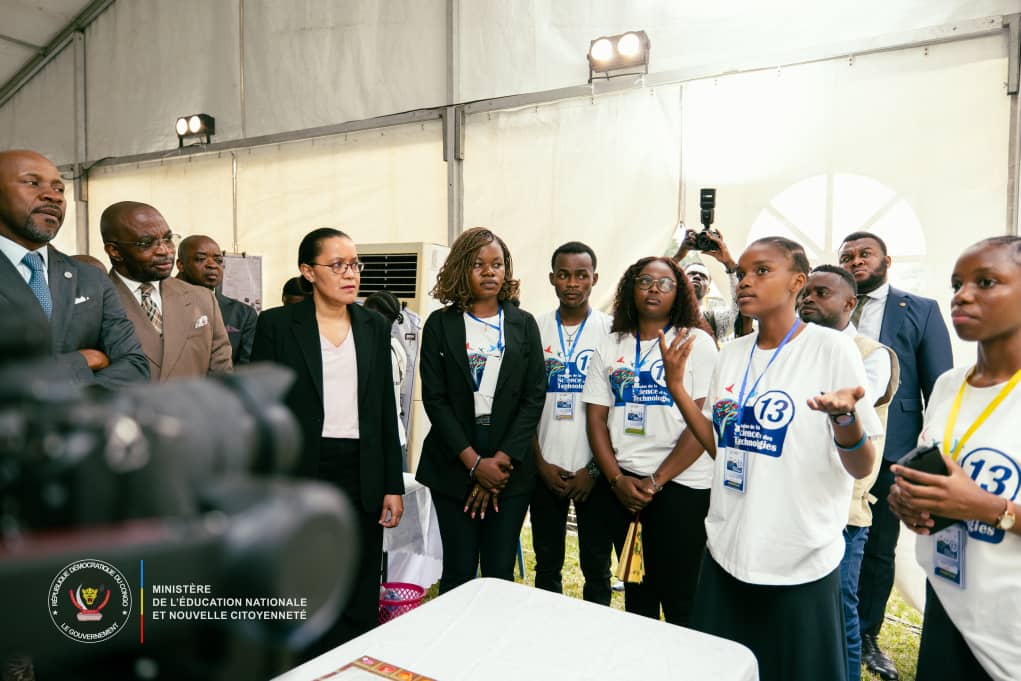
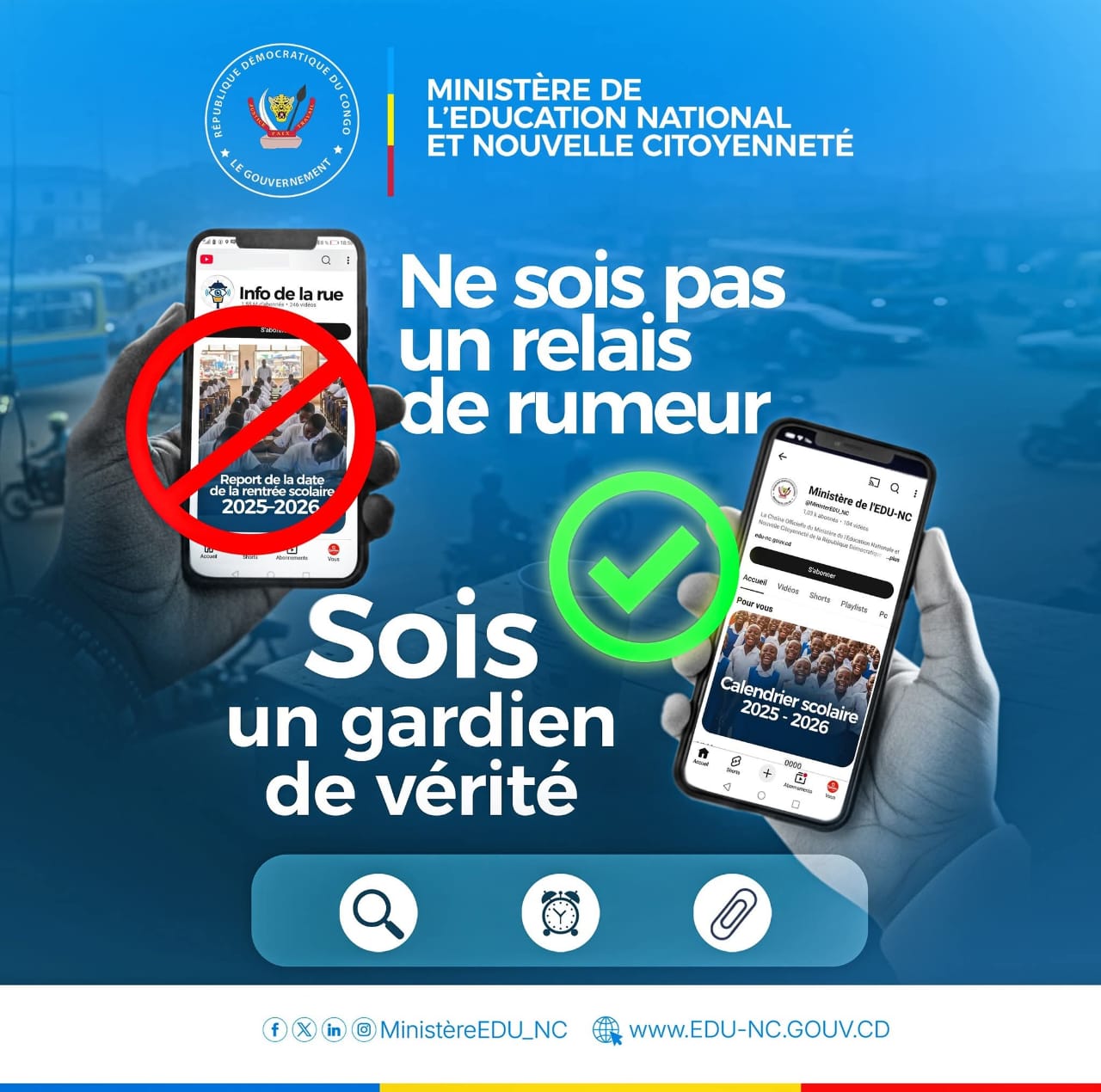
Since November 2025, the Ministry has launched a broad awareness campaign on Media and Information Literacy. This initiative is fully aligned with the vision of New Citizenship, which aims to educate Congolese citizens to be aware not only of their rights but also of their duties in the public sphere, including the digital realm.
Through this campaign, the Ministry calls for: Protecting the dignity and integrity of every person; understanding that sharing obscene content or content that damages another person’s reputation constitutes a criminal offense and a deeply disrespectful act; and adopting responsible habits, particularly verifying information before sharing it.
This approach emphasizes individual responsibility as the foundation of collective cohesion. It serves as a reminder that every click, every post, and every share can have legal, social, and human consequences.
In line with presidential directives, sectoral ministries of education are called upon to gradually integrate training modules on responsible digital use into school and university curricula.
For the Ministry of National Education and New Citizenship, the goal is to go beyond the technical learning of digital tools to promote a civic culture adapted to contemporary realities: respect, critical thinking, discernment in the face of misinformation, and the ethical use of social media.
New Citizenship thus takes on a digital dimension. It requires the active engagement of students, teachers, and educational communities in building a cyberspace that respects democratic values, human dignity, and national unity.
The President’s requirement for a periodic report on the improvement of the digital environment reflects the desire for rigorous monitoring and continuous evaluation of the actions undertaken.
In this context, the Ministry of National Education and New Citizenship reaffirms its commitment to fully fulfilling its role in building a responsible digital society.
For at the heart of New Citizenship lies a strong conviction: freedom is not opposed to responsibility. It is inseparable from it.
It should also be noted that the Ministry of Justice and Keeper of the Seals, in a press release dated March 3, 2026, informed the public of the initiation of legal proceedings regarding digital offenses in accordance with the principles of equality, proportionality, and fundamental rights.
Marie Shomba, Nodriche Kasaï & Deleine Diazolakana
Filter by structure or document type to find the right content.

For any report or information related to national education and new citizenship, call 178