Actualités
16 April 2026

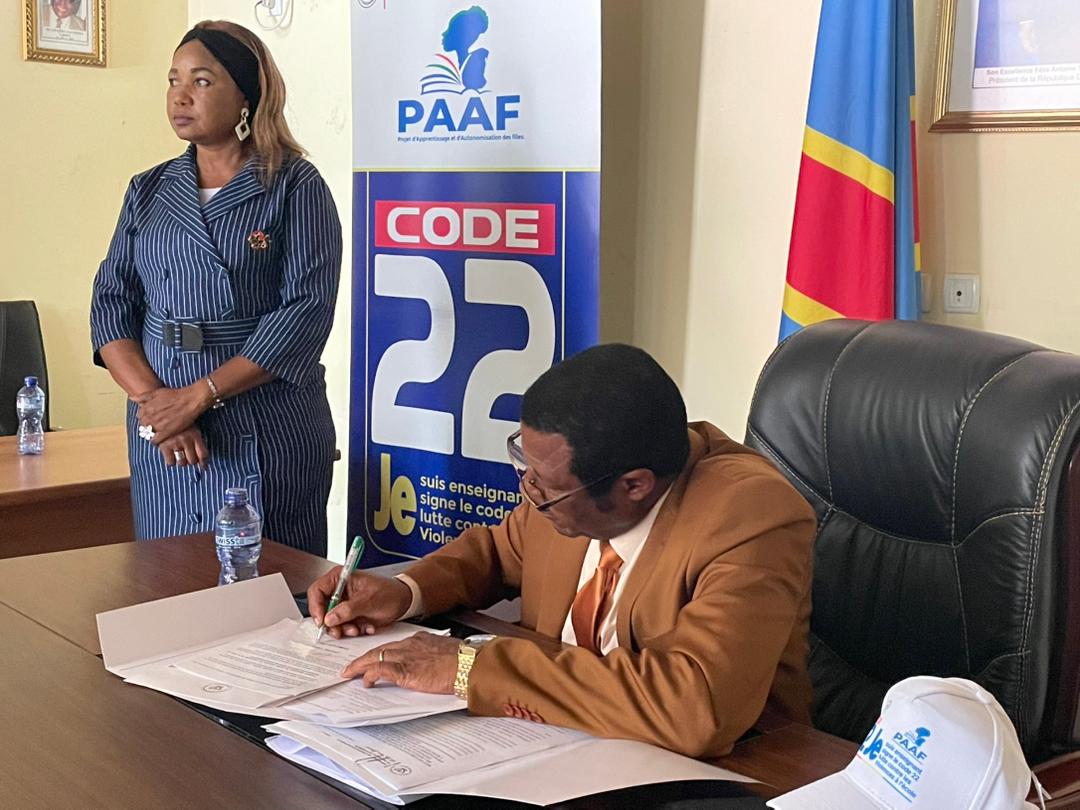
On Thursday, February 19, the new Secretary General for National Education and New Citizenship (EDUC-NC), Juvenal Sanga Kaubo, signed the pledge to adhere to the Code of Conduct for State Public Officials, as well as the provisions regarding sexual exploitation, sexual abuse, and harassment (SEA/SH).
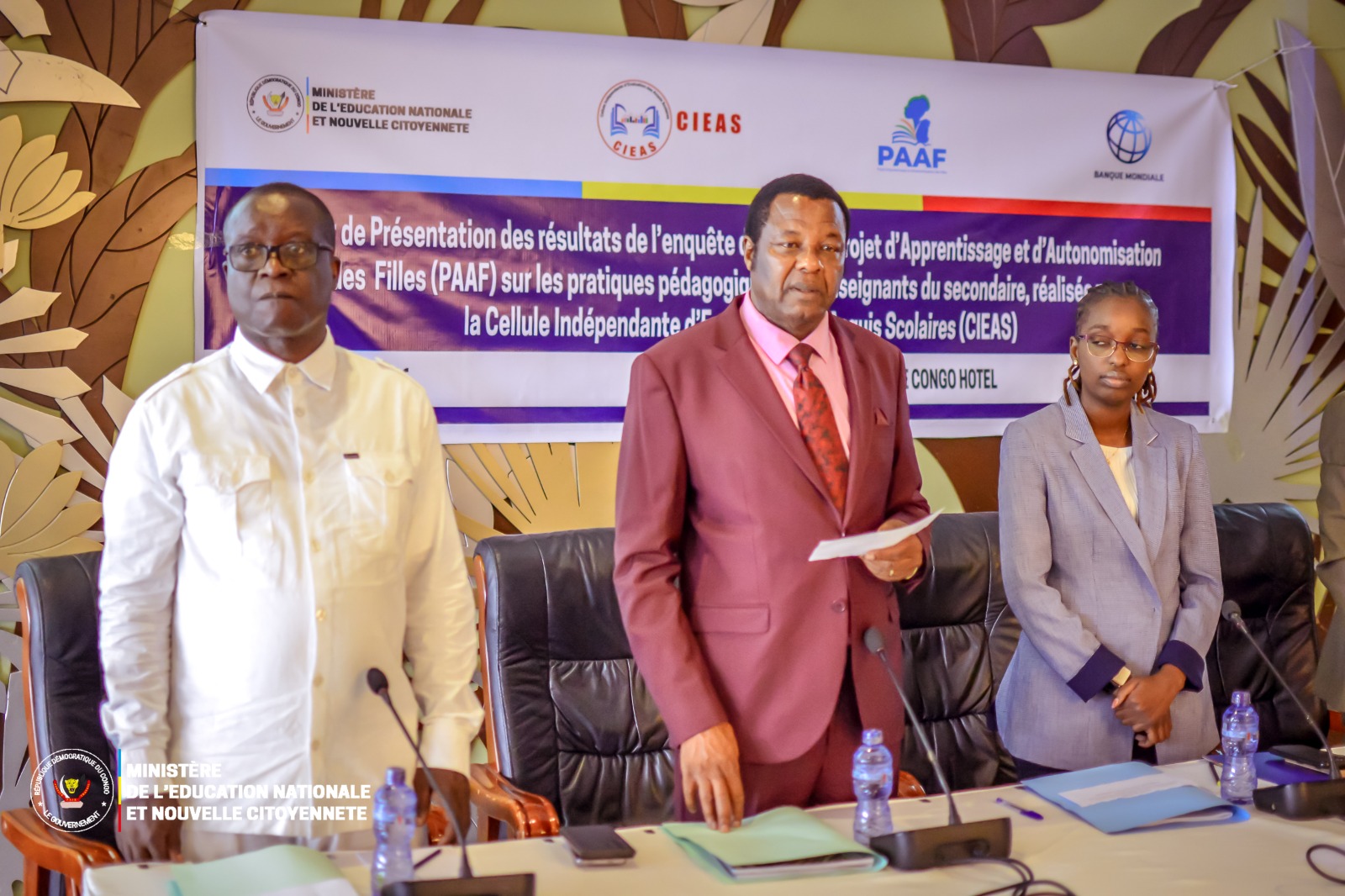
The ceremony, organized as part of the Girls’ Learning and Empowerment Project (PAAF) and coordinated by the Human Resources Directorate, was held at the EDUC-NC General Secretariat in the presence of the directors and heads of departments.
A firm commitment to ethical governance.
Established by Decree-Law No. 017/2002 of October 3, 2002, the Code of Conduct for State Public Officials defines the rules of conduct regarding integrity and professional ethics that govern the actions of public officials.
It is an essential tool for promoting good governance and combating unethical practices within the public administration.
By signing the document, the head of the administration reaffirmed his determination to ensure the effective dissemination of this Code at all levels of the ministry.
“Through this act, I commit to promoting the values of ethics and professional conduct, as well as the imperative to uphold moral standards in public life as desired by the nation’s highest authorities. This initiative must drive a new wave of good governance, from the central administration down to schools, across all educational provinces,” stated Juvenal Sanga Kaubo.
An initiative aligned with the 2024–2029 Five-Year Plan
This initiative is part of the implementation of the 2024-2029 Five-Year Plan spearheaded by the Minister of State, Minister of National Education and New Citizenship, Raïssa Malu, particularly in its strategic focus on strengthening the education system and improving administrative governance.
On this occasion, the Secretary General invited all ministry staff (administrative and teaching) to sign the pledge.
This document will now form an integral part of each employee’s administrative file, both in physical format and in a digitized version produced by DANTIC.
“Dear administrative and teaching staff, this pledge must be a matter for each and every one of us. I invite all administrative staff to sign this document without reservation. This document must remain our daily guide. From now on, a duly signed copy will be part of the physical administrative file at the level of each department or service, and another copy will be kept at the Human Resources Department. DANTIC will handle the digitization,” he emphasized.
A momentum already underway
It should be recalled that Minister of State Raïssa Malu signed this pledge in November 2025, thereby setting an example within the ministry. Last October, administrative staff at the central level and in the administrative offices of eight provinces covered by the PAAF also joined this initiative following awareness-raising activities.
Through this initiative, the Ministry of National Education and New Citizenship reaffirms its commitment to building an administration that is ethical, accountable, and dedicated to excellence, with the aim of ensuring a safe, inclusive school environment that upholds republican values.
Willy Kambulu & Ouriel Mangitukwa
Filter by structure or document type to find the right content.

For any report or information related to national education and new citizenship, call 178