Free primary education: "This reform has been well received by parents" (ANAPECO)
Now in its fifth year of implementation, as provided for by the Constitution of the Republic, the reform establishing free primary education in public schools remains one of the flagship reforms undertaken in the public primary education subsector, which has garnered significant support due to its profoundly social nature.
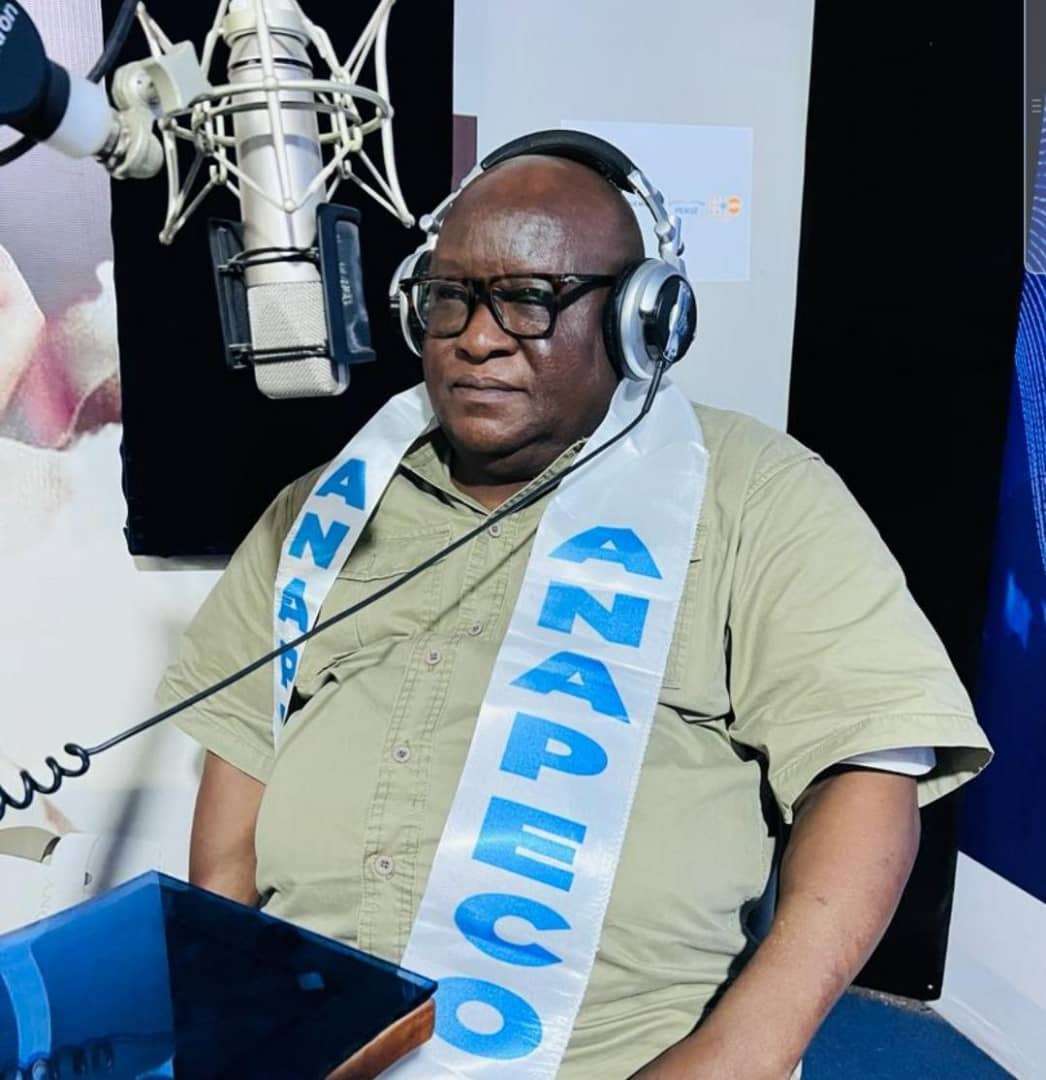
On the one hand, it has enabled more than 6 million school-age children to return to the school system, and on the other, it has alleviated household expenses. To gain a comprehensive overview of the impact of free education on the household budgets of millions of families across the country, the editorial team of the Communication Management Directorate (DGC) at the Ministry of EPST spoke with the National President and Legal Representative of the National Association of Parents of Pupils and Students of the Congo (ANAPECO), Diatezwa Mpongi David Steve.
DGC: Discussing free primary education necessarily involves the elimination of school fees. Tell us, what are the various fees that have been eliminated to achieve free education at the primary level?
Steve Diatezwa: First, there was the elimination of fees related to parents covering teachers’ expenses. This was eliminated for parents at the primary level. There was also the elimination of the tuition fee, which cost 1,000 Congolese francs (1,000 FC) per student that parents used to pay. We can also mention the fee for report cards, which was eliminated. Aside from the fees I just mentioned, it should be noted that other one-time fees were also eliminated.
DGC: You are one of the parents best positioned to speak on behalf of your peers. Tell us, to what extent has the implementation of free primary education actually helped ease the burden on household budgets?
SD: It must be said that the impact of free primary education on households spread across the entire national territory is a reality. It goes without saying that when you no longer have to pay for one-time fees, when you no longer have to pay for report cards, when you no longer have to pay tuition fees, and when you no longer have to cover teachers’ expenses, households have been revitalized by these savings.
DGC: On a scale of 1 to 10, what score would you give if asked to evaluate the impact of free education on households?
SD: On a scale of 1 to 10, I would say that free primary education has contributed 5 out of 10 to household well-being.
DGC: Perceptions of free education differ depending on whether one lives in an urban or rural area. Based on the information you have, how has this reform been received in rural areas?
SD: It’s important to note that we’ve established 50 provincial committees and 620 sub-provincial committees that oversee school committees within the schools. And the feedback we’re receiving through this mechanism indicates that this reform has been well received by parents.
DGC: Free primary education, as is to be expected when implementing a reform, has led to unintended consequences, notably overcrowding in classrooms. The government is addressing this, particularly through the construction of classrooms—specifically through the 145 Territories Development Program (PDL145T) and other initiatives. What feedback are you receiving regarding efforts to mitigate these underlying effects?
SD: We know that this reform has indeed faced unintended consequences, including overcrowded classrooms. Nevertheless, the Ministry has implemented palliative measures, notably the establishment of temporary classrooms; an increase in the number of teachers; the payment of salaries to over 250,000 primary school teachers; the free education allowance; and the rural area allowance granted to teachers. And when we look at the construction of schools through the 145 Territories Development Program, it is a response, but not yet sufficient to fully resolve the problem. Never mind, it is already a start toward addressing the problem at hand. And this effort must continue so that there are more and more new schools, new classrooms, and new teachers, as well as desks for the students.
DGC: Let’s talk about funding for free primary education. We know that funding for free primary education is an issue involving billions of U.S. dollars annually. As an educational partner, what proposals or ideas for innovative financing can be implemented to support existing efforts?
SD: On this subject, we believe that the first step should be to raise awareness not only among parents but also among provincial administrators and officials so that the Fund for the Promotion of Education and Training (FPEF) can effectively receive the tuition fees paid by parents to support this public institution, which is dedicated to supporting the government’s efforts. And it is in this regard that we are proud to note that it was with the money parents paid in this context that the program called “Not a School Without a Desk” was launched. So, it is the money parents paid that makes this program work. According to the latest reports, the program is continuing, and more than 60,000 desks have already been delivered to various public schools throughout the country.
DGC: Beyond what has already been done, in your opinion, what could be done to ensure the sustainability of free primary education in the Democratic Republic of the Congo?
SD: What can be done to ensure the sustainability of free education is, first and foremost, to increase the budget allocated to the education sector in order to improve teachers’ working conditions. Thus, once teachers’ salaries are improved and the recruitment of qualified teachers to meet human resource needs is realized, these combined success factors will lead to better outcomes for schools.
Paulin NGENDA