Actualités
16 April 2026
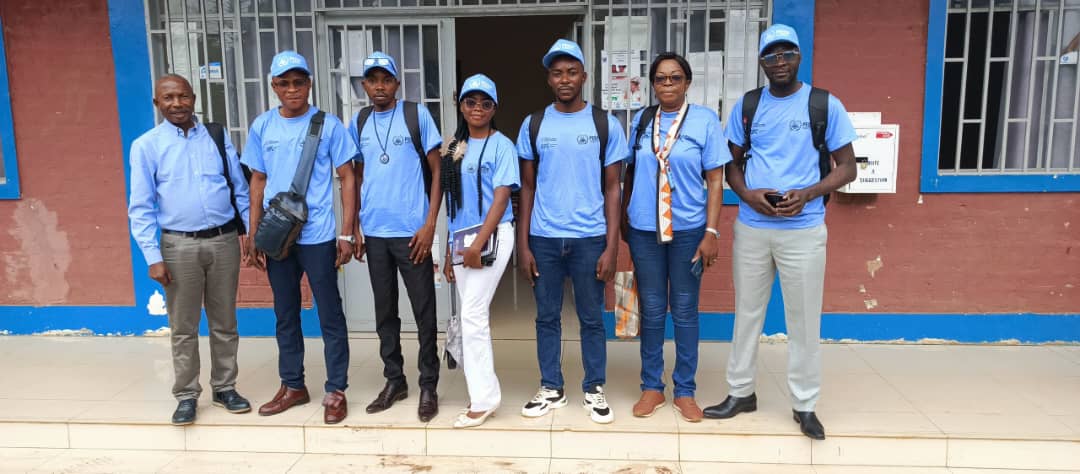
Ten days after the launch of the mission to map services for addressing gender-based violence (GBV), teams from the Primary Education Quality Improvement Project (PEQIP) have been deployed in the field since March 14 in four administrative provinces of the Democratic Republic of the Congo (DRC).
These provinces are Ituri, Kasai, Kasai Central, and Kasai Oriental, covering several educational districts, namely Ituri 1, 2, and 3; Kasai 1 and 2; Kasai Central 1 and 2; and Kasai Oriental 1 and 2. The primary task of these teams—composed of experts from PEQIP and the Ministry of National Education and Initiation into New Citizenship—was to collect and consolidate data from care facilities located near the schools targeted by the project.
Coordinated from Kinshasa, this large-scale operation relies on rigorous planning and the gradual deployment of teams to the main intervention hubs.
Each interview, conducted using a digital questionnaire, lasted an average of 45 minutes and provided a detailed record of service offerings, operational capacities, and existing referral mechanisms. The objective is clear: to develop a reliable and actionable map to guide future interventions, particularly in areas where the need for protection and support for victims of GBV is most acute.
The success of this mission depends largely on the involvement of local stakeholders. Provincial education authorities, technical services (health, gender, social affairs), and civil society organizations are actively contributing to facilitating operations.
Preparatory meetings of the provincial education committees helped structure this collaboration and strengthen local ownership of the issues. On the ground, this synergy translates into easier access to facilities and improved information flow.
However, the teams faced major logistical and security challenges. In the Luiza territory, in Kasaï Central, some schools are located more than 100 kilometers, or even 200 kilometers, from administrative centers. Teams sometimes had to cross rivers such as the Lulua or the Lueta by canoe, with motorcycles and equipment on board, before continuing their journey on rough dirt roads.
Under these conditions, it can take a full day just to reach a single location. Unpredictable weather and poor road conditions significantly slow progress, sometimes requiring last-minute adjustments.
Further north, in Ituri Province, the challenges take on a security dimension. On certain routes, particularly between Bunia and Mambasa, access to certain areas remains limited, complicating comprehensive coverage of the targeted sites.
Faced with these challenges, the teams prioritize a rigorous approach focused on the quality of the data collected. Every piece of information is verified, and every interview is conducted methodically, with a constant focus on reliability.
This requirement is all the more crucial given that the results of this mapping will serve as the basis for planning future PEQIP interventions, particularly regarding student protection and the strengthening of support services.
Ultimately, this mapping should help strengthen the integration of GBV support mechanisms into the Congolese education system, ensuring better access for students to schools that are more protective and inclusive.
Shomba Marie
Filter by structure or document type to find the right content.

For any report or information related to national education and new citizenship, call 178