Actualités
16 April 2026


 UNESCO Commends an “Open and Inclusive” Collaboration
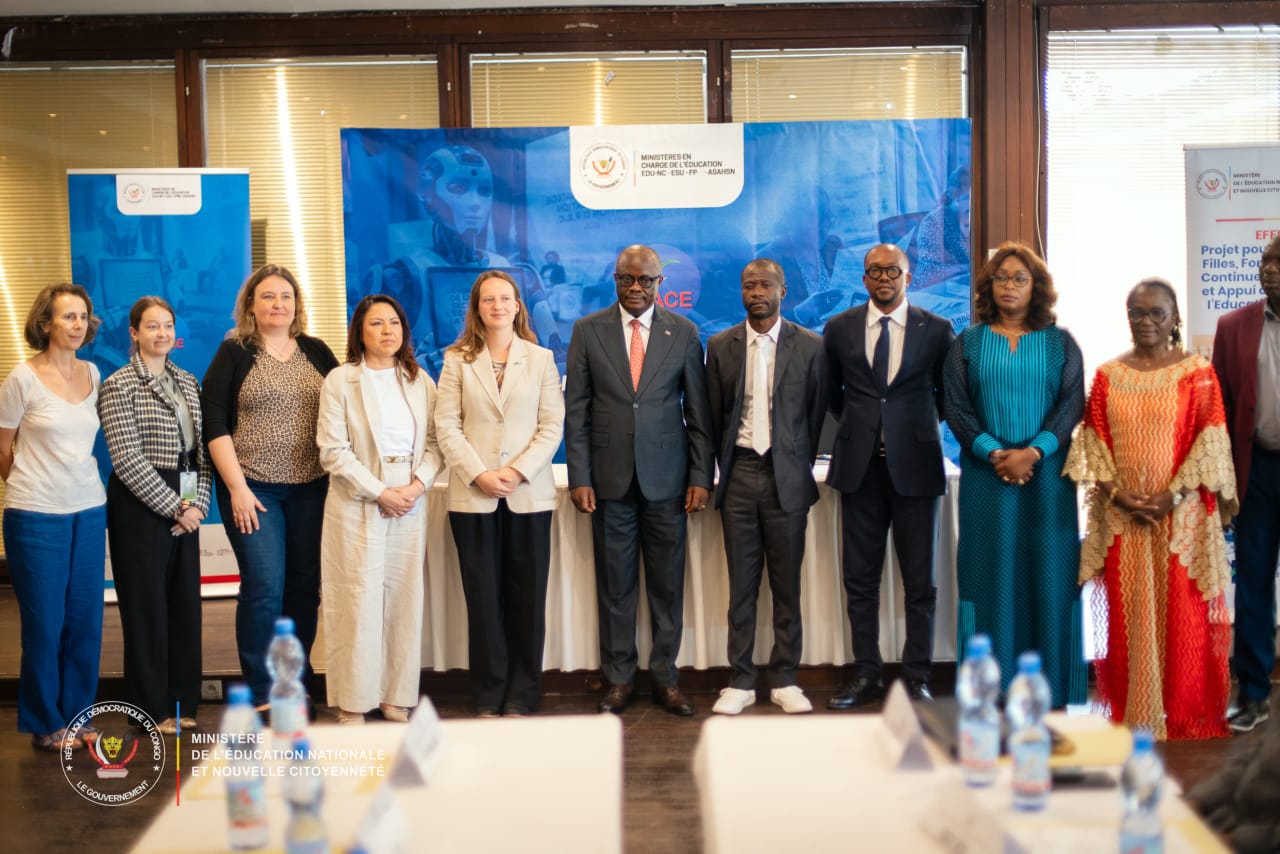
André Kalonji, Project Officer at UNESCO, noted that this meeting, which led to the adoption of the roadmap, marks an important step in optimizing implementation, thereby strengthening the coordination of educational initiatives, particularly those related to continuing teacher education. He reaffirmed UNESCO’s commitment to supporting initiatives aimed at strengthening equitable access to quality, inclusive, and innovative education.
UNESCO Commends an “Open and Inclusive” Collaboration
André Kalonji, Project Officer at UNESCO, noted that this meeting, which led to the adoption of the roadmap, marks an important step in optimizing implementation, thereby strengthening the coordination of educational initiatives, particularly those related to continuing teacher education. He reaffirmed UNESCO’s commitment to supporting initiatives aimed at strengthening equitable access to quality, inclusive, and innovative education.
“We commend the mobilization of the various departments within the Ministry and encourage open, inclusive, and constructive collaboration. Together, we can make the ‘EDU-NC APP’ a true catalyst for transforming the Congolese education system,” stated André Kalonji.Speaking to launch the conference, the Acting Secretary-General, on behalf of the Minister of State, Minister of National Education and New Citizenship, thanked UNESCO for its considerable support in this process of optimizing the application. A digital platform to transform education Alexis Yoka praised the progress made in optimizing this tool, which is intended to be a strategic asset in the transformation of the Congolese education system.
“The ‘EDU-NC APP,’ as a digital platform, must respond effectively and inclusively to the needs of learners, teachers, and administrators within the Congolese education system. May this application become a true driver of performance, equity, and educational innovation,” said the acting secretary-general, who asked participants to put their expertise to work for the betterment of Congolese education.During the presentation of this application, the Director of the Communication Management Directorate (DGC), Jean-Jeef Mwanza, reiterated that its objectives include: • connecting the public who use the Ministry’s services with the directorates that provide them (SERNIE, IGE, DIGE, etc.) through data collection forms; • to professionally digitize the complaint management mechanism (MGP) through an electronic complaint collection interface; • to ensure the reliability of confidential data through a data validation process carried out by the relevant departments and the DGC; • and to secure data collection by encrypting data transmission. The features of the “EDU-NC APP” were then presented and explained to participants to gather their feedback, amendments, and concrete proposals to guide improvements to this tool. Several contributions and proposals were collected with a view to incorporating them so that this tool meets the needs of students, teachers, and school administrators.
 Training and Deployment: Next Steps in the Timeline
The discussions regarding the roadmap for the optimization process led to its adoption by the experts, subject to their valuable amendments. This roadmap outlines several activities in the coming days, including:
• Upgrading and validating the application in accordance with the functional and technical requirements of the various departments within the Ministry of National Education and New Citizenship;
• Training the core group of trainers;
• Training users of the application;
• Training pilot schools on academic monitoring;
• Training stakeholders involved in credits and representatives on the application;
• Launch of the pilot phase of the application in the educational sub-provinces;
• Official launch of the application by the Minister of State;
• Deployment of trainers to the educational sub-provinces.
An initiative that is part of the 2024–2029 five-year plan
This optimization process aligns with the fifth guiding principle of the Ministry of National Education and New Citizenship’s 2024–2029 five-year plan, which focuses on integrating Information and Communication Technologies (ICT) into teaching and administrative management to prepare students for the challenges of the 21st century.
Ivan Honoré Mudiangombé and Nodriche Kasaï
Training and Deployment: Next Steps in the Timeline
The discussions regarding the roadmap for the optimization process led to its adoption by the experts, subject to their valuable amendments. This roadmap outlines several activities in the coming days, including:
• Upgrading and validating the application in accordance with the functional and technical requirements of the various departments within the Ministry of National Education and New Citizenship;
• Training the core group of trainers;
• Training users of the application;
• Training pilot schools on academic monitoring;
• Training stakeholders involved in credits and representatives on the application;
• Launch of the pilot phase of the application in the educational sub-provinces;
• Official launch of the application by the Minister of State;
• Deployment of trainers to the educational sub-provinces.
An initiative that is part of the 2024–2029 five-year plan
This optimization process aligns with the fifth guiding principle of the Ministry of National Education and New Citizenship’s 2024–2029 five-year plan, which focuses on integrating Information and Communication Technologies (ICT) into teaching and administrative management to prepare students for the challenges of the 21st century.
Ivan Honoré Mudiangombé and Nodriche Kasaï
Filter by structure or document type to find the right content.

For any report or information related to national education and new citizenship, call 178