Actualités
16 April 2026
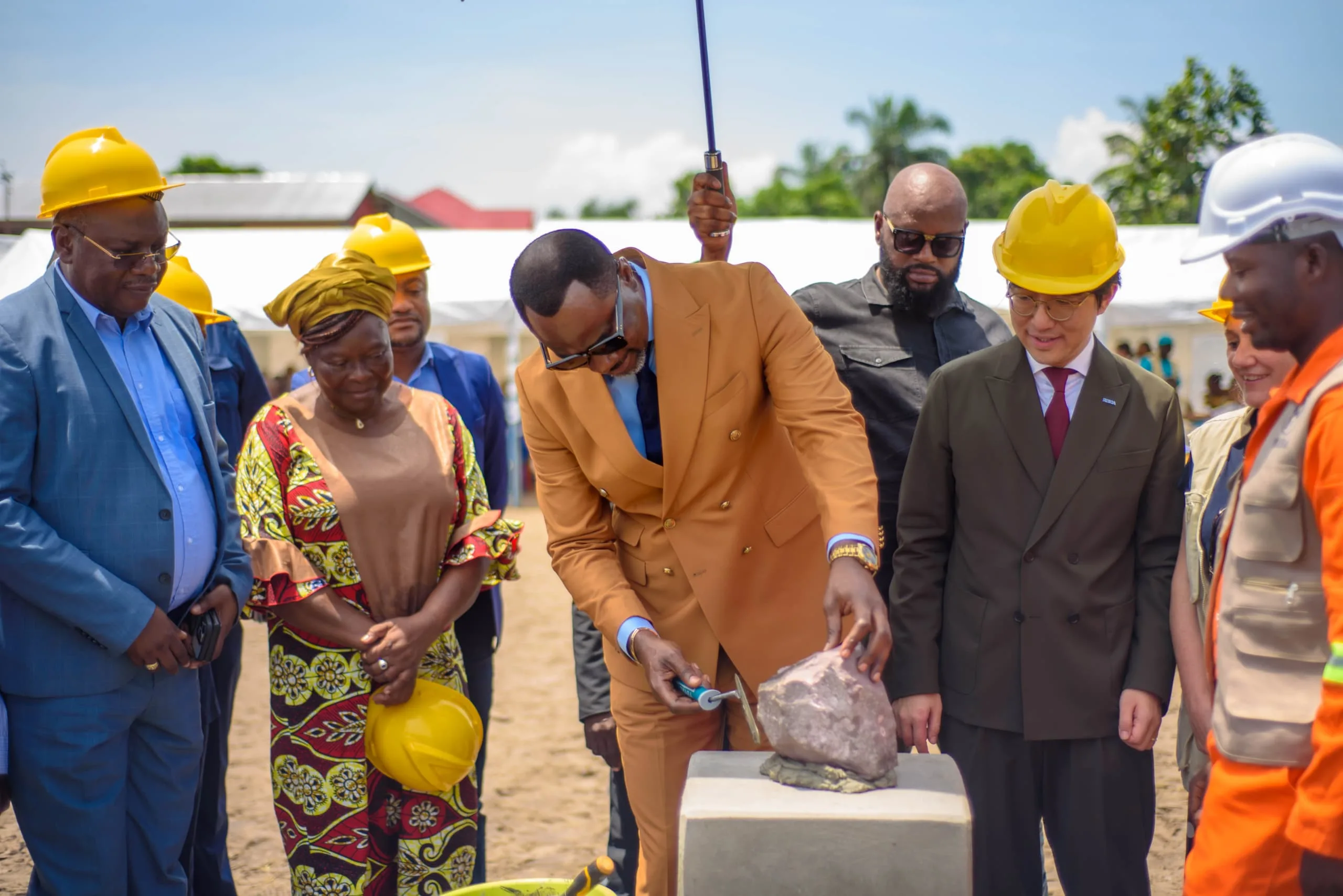
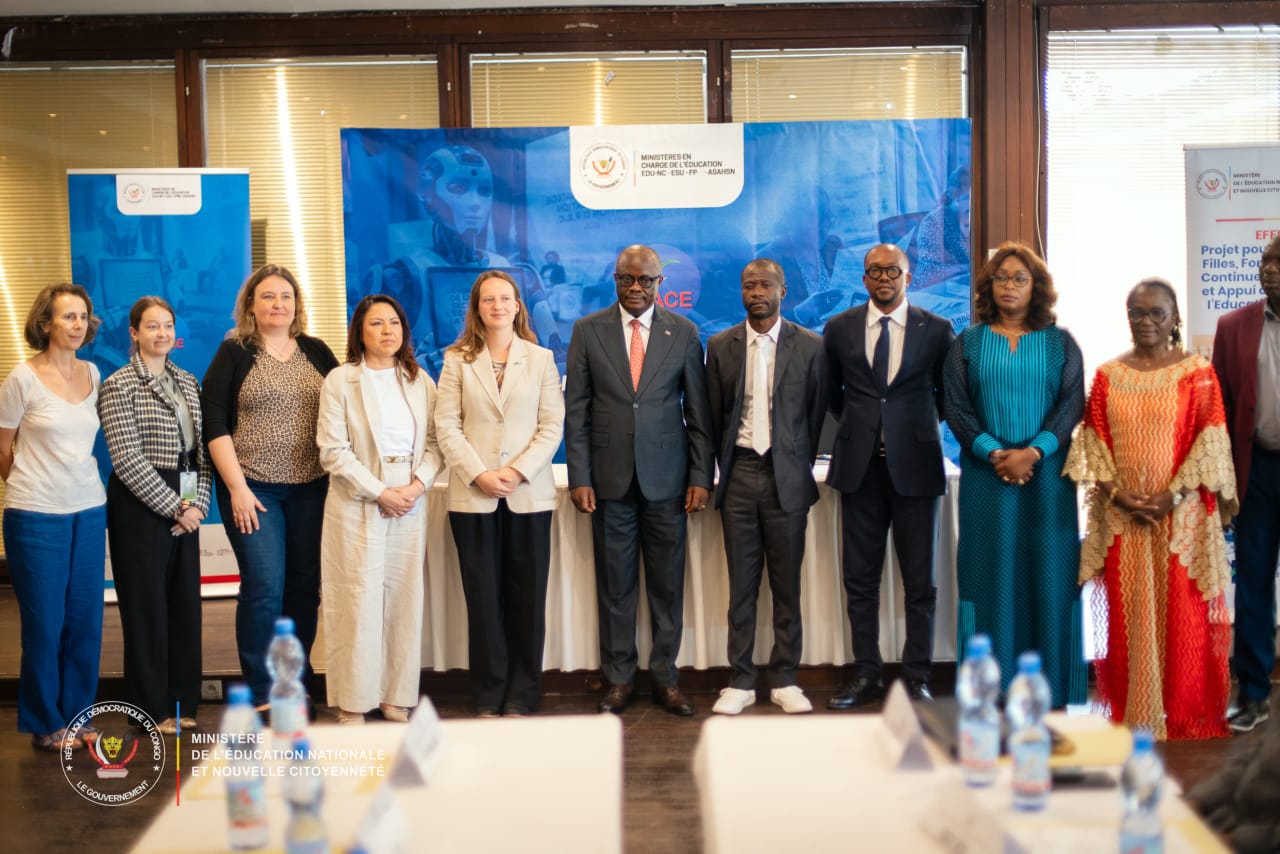
It was on the grounds of the Maman Sifa School Complex, recently renovated in the municipality of N'sele, that the Minister of Primary, Secondary and Technical Education (EPST), Professor Tony Mwaba Kazadi, laid the cornerstone for the construction of 10 schools, 2 multipurpose halls, 10 administrative offices, 80 latrines, and 6 water points in 11 primary schools on Thursday, April 11, 2024. The event was attended by the Representative of the Korean International Cooperation Agency (KOICA), the Deputy Representative of UNICEF, and ministry officials and staff.
This marks yet another occasion on which the Kinshasa-Plateau educational province will benefit from new schools, thanks to the tireless efforts of Minister Tony Mwaba, who is relentlessly committed to consolidating the achievements of the first term of the President of the Republic, Félix Antoine Tshisekedi Tshilombo. The Provincial Director of the EPST for this jurisdiction highlighted this in his remarks delivered during today’s ceremony. Robert Nkongi noted that his educational province has already received six prefabricated schools, a donation from the Government of the Republic, five latrines for six households, and the renovation of Maman Sifa Primary School by the School Infrastructure Directorate of the Ministry of EPST.
As part of the 145 Territories Development Program, PROVED announced that Kinshasa-Plateau has already received three schools, including the construction of Maman Antoinette Primary School in Menkao, Maluku commune—achievements that prompted Robert Nkongi to express his gratitude to the head of the EPST.
Speaking next, the Deputy Representative of UNICEF, Kalya Marino noted that this program, funded to the tune of 7.2 million U.S. dollars, aims to contribute to improving children’s academic achievement and to ensure equitable, high-quality primary education in 108 primary schools in the N’sele 1 and 2 sub-districts, in order to provide children—especially girls—with an environment conducive to learning.
"The breakdown of the funding allocation is approximately $6.5 million for COICA and $0.7 million for UNICEF. "More than 52,000 students—49% of whom are girls—975 teachers, 108 schools, 20 inspectors, and 324 parent committee members will directly benefit from this program," stated the Deputy Representative of UNICEF.
Beyond the construction of school buildings, Kalya Marino noted that in 2024, this program plans to distribute school supplies, including backpacks, textbooks, notebooks, pens, and rulers.
Speaking last, the Minister of Basic and Secondary Education recalled that the Head of State, Félix Antoine Tshisekedi Tshilombo, had decided to implement free primary education, a constitutional provision that had long remained unenforced in the DRC for several years.
"The President of the Republic had the courage to bring this provision out of the Constitution and bring it to life. Today, free public primary education has become a reality, and its expansion is moving toward secondary education," said Professor Tony Mwaba.
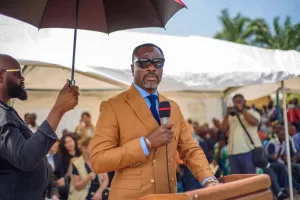
Regarding the issue of overcrowded classrooms—one of the side effects of free education—the head of the EPST noted that the situation is improving qualitatively, given the government’s efforts to build new school infrastructure and renovate certain schools.
"Building new schools is a priority; this is already being done under the PDL 145 Territories program and other projects we have at the ministry level. Not long ago, we had a small emergency project, funded by the ministry itself, to rehabilitate the few public schools we targeted in the city of Kinshasa in collaboration with the School Infrastructure Directorate. Today, that work is complete. Well, this project will help us reverse the trend and address the problem of overcrowding in the Plateau Educational Province, which has been identified as a hotbed of negative values. I say this and I reiterate it: the issue of education is the exclusive responsibility of the state," declared Minister Tony Mwaba.
Addressing the partners, the head of the EPST reiterated his thanks to the Korea International Cooperation Agency, as well as to UNICEF, which works closely with his ministry.
"I have verified that the sites have been approved by the ministry, because we want to truly meet our needs. Unlike other partners, who choose their own sites and provinces to do as they please, here I have verified that everything has been done in collaboration with the ministry," he said.
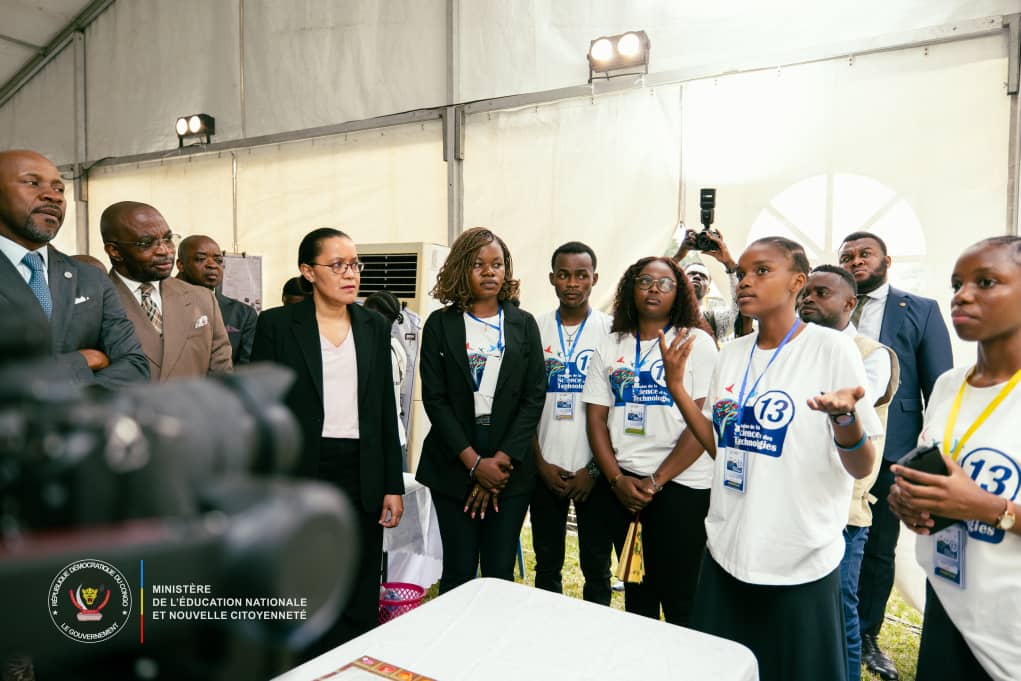
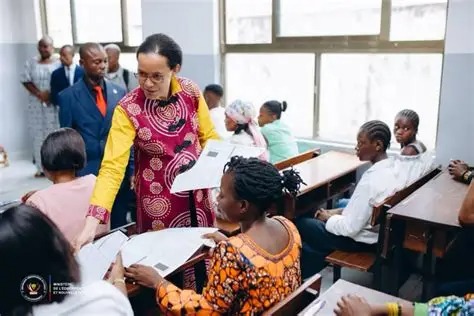
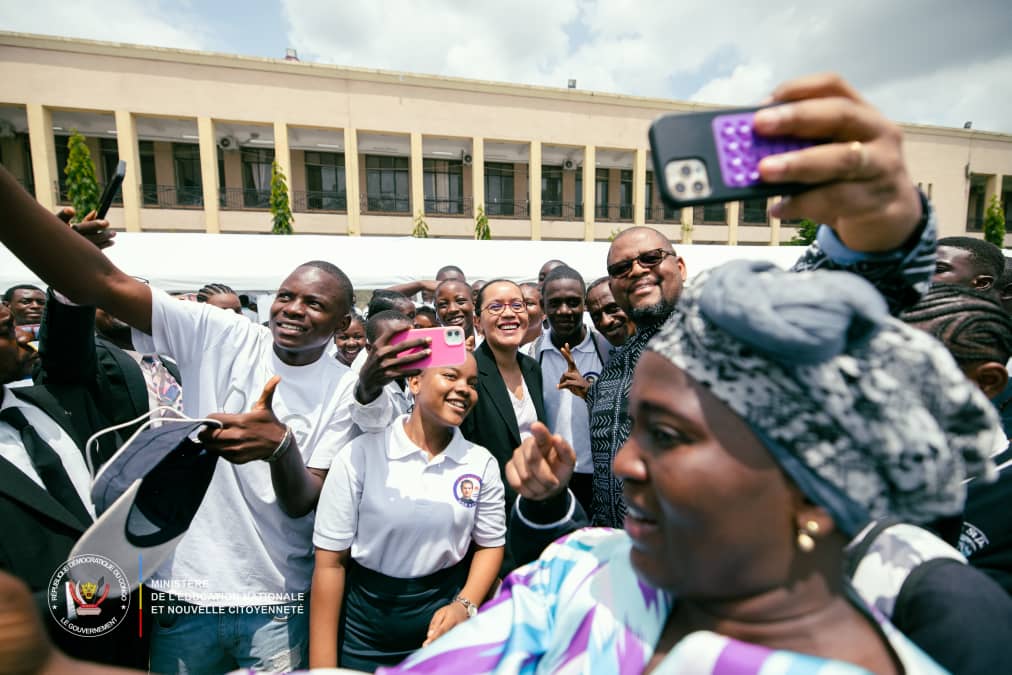
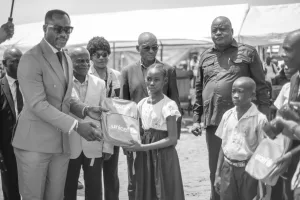
The minister concluded the ceremony by handing out school kits to the students.
Christian BELLA
Filter by structure or document type to find the right content.
For any report or information related to national education and new citizenship, call 178