Actualités
16 April 2026


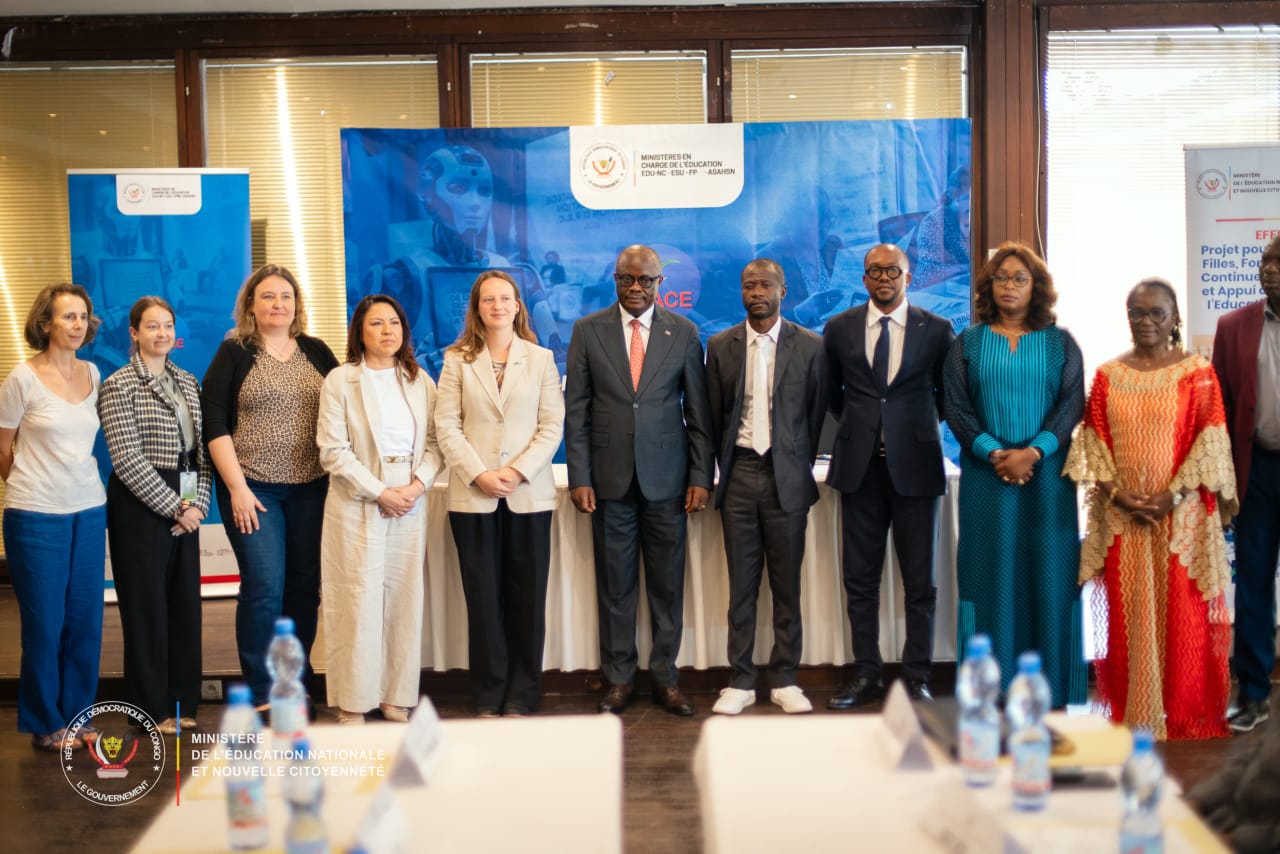
It was in the meeting room of Don Bosco College, in the municipality of Masina, that Hubert Kimbonza, Inspector General of National Education and New Citizenship (EDU-NC), accompanied by the provincial chief inspector (IPP) José Diangenda, gathered all the inspectors from the Kinshasa-Tshangu educational province to continue his series of moral re-education sessions. On the agenda: the dissemination of the Ministry’s 2024–2029 Five-Year Plan and the promotion of values.
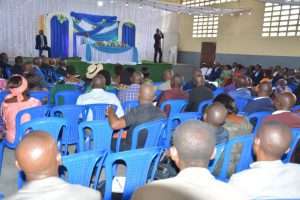
During this training session, the head of the General Inspectorate emphasized that the Ministry of National Education and New Citizenship’s 2024–2029 Five-Year Plan defines five major strategic objectives that will guide all actions and initiatives over the next five years, including improving access to quality education, promoting equity and inclusion, strengthening the professional development of teachers and inspectors, modernizing the education system through the integration of ICT, and fostering a new sense of citizenship—objectives designed to address the current challenges facing the Congolese education system while preparing it for the future demands of a rapidly changing society.
Hubert Kimbonza emphasized that this Five-Year Plan is based on five guiding principles that will steer all actions and reforms to be undertaken over the next five years: dialogue with stakeholders, strengthening of administration, investment in teacher training and professional development, promotion of equity and inclusion, and the integration of Information and Communication Technologies (ICT). He explained that these principles are designed to ensure a profound and sustainable transformation of the Congolese education system, in line with national aspirations and global development goals.
"We reviewed the five guiding principles of our five-year plan and the inspector’s role in this plan. There are guiding principles that directly concern the inspector. When we speak, for example, of strengthening the capacities of teachers—who must be at the center of the education system—that is the inspector’s work. He must work within the framework of dialogue, but also make use of ICT in school inspections,” he said.
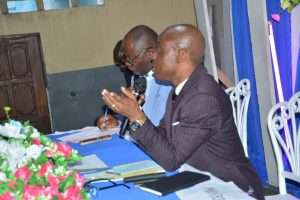
Another important element of the Five-Year Plan, highlighted by the Inspector General, is the development of a new citizenship, which remains essential for building a strong Congolese society that is united and respectful of republican values. Hubert Kimbonza explained to the inspectors that this new sense of citizenship is defined as an individual and collective commitment by citizens residing in the Democratic Republic of the Congo to promote and respect the common good, republican and societal values, and to foster unity in diversity.
"We also emphasized this new citizenship. The shift in mindset must begin within our ministry. Patriotism, love for the nation. If students already know that they must not agree to sell a single inch of our national territory, I believe that anyone who comes to disrupt the DRC will find no way in. So, this is to say that our ministry is the foundation of the DRC’s development. And the inspector is there to monitor, to verify that everything is being implemented, that everything is proceeding normally at the school,” he stated.
The head of the General Inspectorate clearly told the inspectors to take off their “old robes” and change their approach in order to comply with the new official regulations.
"We’ve spent too much time with them, because in the past, Tshangu was also seen as the seat of anti-values. We told the inspectors that, just as a caterpillar transforms into a butterfly, Tshangu must change! And this change must be substantive, not merely superficial. This change must be real, because we must do what will please the Congolese people, what will please the authorities," he said, before concluding: "Do a good job; we are counting on you. I know the task is not easy, but we have to start somewhere. We must take the first step together."
After the Kinshasa–Plateau and Tshangu leg, Inspector General Hubert Kimbonza will continue his series of moral reforms in the Mont-Amba educational province.
Christian BELLA
Filter by structure or document type to find the right content.

For any report or information related to national education and new citizenship, call 178