Actualités
16 April 2026

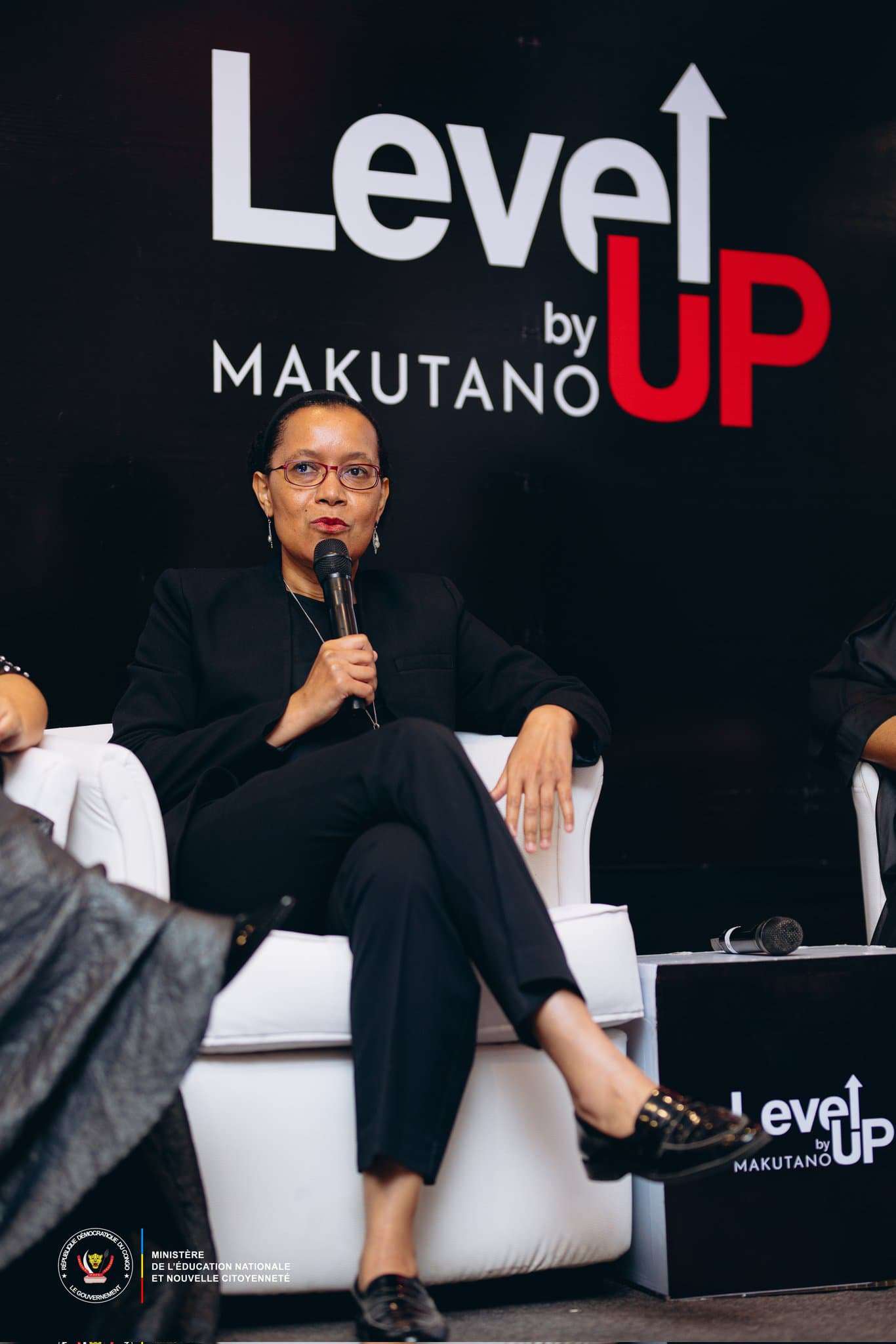
“The primary place where peace and prosperity must be built is the school. Here, our challenge is precisely to work at the school level so that we have girls and boys, citizens, who embrace a different vision, a different way of doing things, of interacting, of cooperating—a way of waging war and another way of building peace,” she stated.The importance of taking action starting in preschool was also emphasized.
“Becoming aware of everything we can do better, taking action from the very beginning at the preschool level and continuing over time—that is what must be implemented to chart a different course,” Raïssa Malu argued.
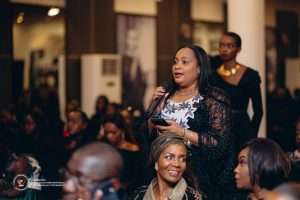 During the speech by the Minister of EDU-NC, the question was raised as to why the study of foreign figures is included in the curriculum in the DRC. This issue is viewed in the country as an alienation from Western culture.
Raïssa Malu emphasized that this knowledge and learning contribute to students’ open-mindedness. She believes it is essential to focus on the quality of education and that no knowledge is useless. And education influences worldview by also promoting culture and knowledge. It was suggested that this issue may arise due to an imbalance in this type of knowledge. It would be regrettable to focus solely on Western figures while ignoring or forgetting other Congolese or African historical figures.
The reform of the Congolese education system was also discussed. Raïssa Malu acknowledged that implementing reforms can take time, and assured that progress is underway in her ministry, with science and computer science curricula being revised to address this aspect. It was noted that the reform of these specific curricula now incorporates elements of artificial intelligence.
During the speech by the Minister of EDU-NC, the question was raised as to why the study of foreign figures is included in the curriculum in the DRC. This issue is viewed in the country as an alienation from Western culture.
Raïssa Malu emphasized that this knowledge and learning contribute to students’ open-mindedness. She believes it is essential to focus on the quality of education and that no knowledge is useless. And education influences worldview by also promoting culture and knowledge. It was suggested that this issue may arise due to an imbalance in this type of knowledge. It would be regrettable to focus solely on Western figures while ignoring or forgetting other Congolese or African historical figures.
The reform of the Congolese education system was also discussed. Raïssa Malu acknowledged that implementing reforms can take time, and assured that progress is underway in her ministry, with science and computer science curricula being revised to address this aspect. It was noted that the reform of these specific curricula now incorporates elements of artificial intelligence.
“The positive aspect is that our education system has already taken action, thanks to the use of virtual AI tutorials, which have enabled us to assess the proficiency levels—particularly in mathematics—of our students and teachers. This analysis shows that we can reduce a two- to three-month, or even six-month to one-year, learning gap,” she stated.She recommended integrating AI into educational strategies, as this could train a new generation of professionals more quickly and effectively, thereby propelling the country toward the Fourth Industrial Revolution.
“AI will train professionals in various fields much more quickly and effectively, and it is the individuals in these fields who will accelerate development, moving from the first industrial revolution to the fourth,” explained the Minister of National Education.In this context, Raissa Malu cited the Local Development Program (PDL) for 145 territories as an ambitious project aimed at putting the country on the path to development. Hence the need for her to strengthen the administration’s capacity to achieve the set objectives. The leadership of the Head of Government, Judith Suminwa, was cited as an example of collaboration and cooperation among government members. Consequently, Raissa Malu invited the women entrepreneurs present at Level Up Makutano to work together as a multidisciplinary team and to draw on each other’s strengths to overcome weaknesses and move forward together toward a better future. It should be noted that Minister Raïssa Malu’s participation in the Level Up Makutana forum in the city of Kinshasa served as a call to collective action in support of education, thereby ensuring development and a promising future for the DRC. Marie Shomba
Filter by structure or document type to find the right content.

For any report or information related to national education and new citizenship, call 178