Actualités
16 April 2026
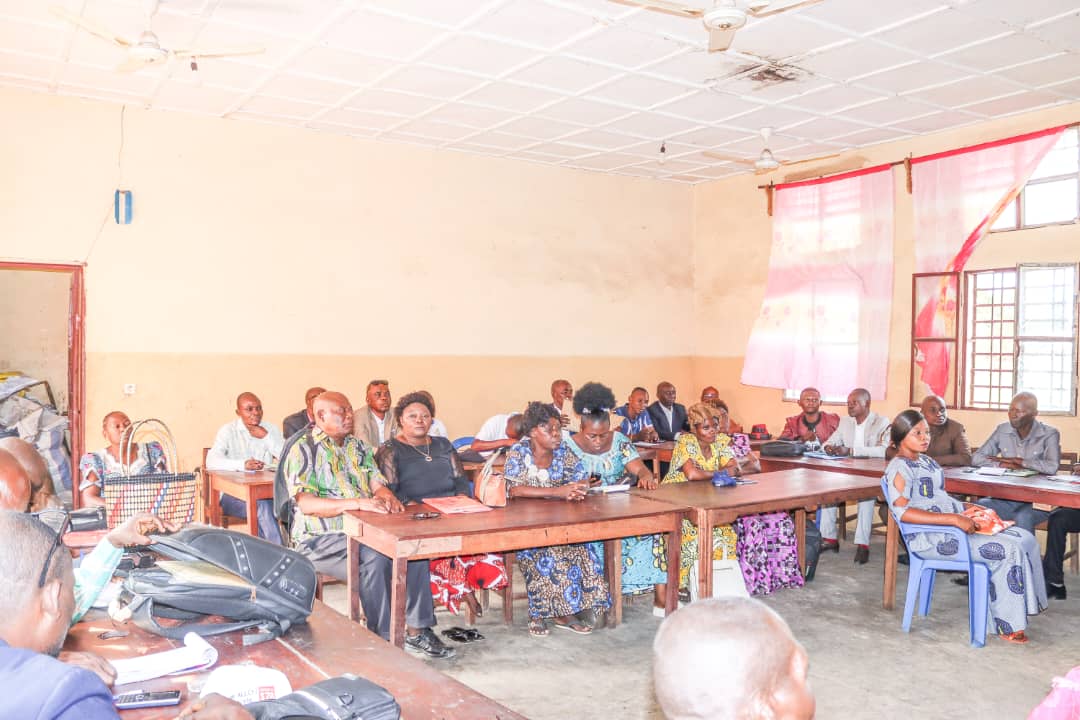
“We have no room for error. You are the first links in a cascade training system. What you learn here, you must pass on to the principals of public elementary schools—and do so effectively.” The call is clear and resonates like a moral contract.Also present, Mr. Kasanji Oscar Mudjibu, provincial chief inspector, praised the support of the Primary Education Quality Improvement Project (PEQIP), made possible through funding from the Global Partnership for Education (GPE). According to him, investing in the capacity-building of supervisors means strengthening Congolese schools at their foundation. The training officially begins. After the introductions, the two lead trainers from the National Primary Teacher Training Service (SERNAFOR), Robert Kotambete and Émilienne Akenda, introduce the methodology: a participatory approach. Very quickly, the participants agree on a ritual: appointing a “village chief” responsible for maintaining group discipline. Laughter, winks, but also a great deal of respect. The dynamic quickly takes shape. Shortly afterward, a pre-test is distributed. Everyone pores over their paper with seriousness. Pens glide across the page, sometimes hesitantly, but one senses the determination to give their best. This isn’t a competition: it’s a starting point, a reflection of skills. In the afternoon, the first interactions unfold one after another. We discuss pedagogical leadership, educational management, and the pedagogical leadership of the school principal. The room buzzes with ideas and strong opinions. A few disagreements arise—inevitable in a space of sincere reflection. The trainers, calm and experienced, gently steer the conversation back on track: here, debating, listening, and growing are integral parts of the learning process. Bonds strengthen, and the atmosphere becomes more collaborative and focused. An inspector murmurs under her breath, almost as if sharing a secret: “You can tell this training won’t be like the others.” ” The tone is set. Then, it’s time to get down to business: participants split into subgroups to begin their first collaborative tasks. The educational process is underway. The serious work begins. Chronicle of a Second Day Focused on Action On the second day of the workshop in Mweka, the morning begins with an anticipated ritual. The participants tackle the reading of the report from the first day. This moment, often seen as administrative, becomes here an exercise in ownership: we rephrase, we question, we improve. The memory of the workshop is not dictated; it is co-constructed. But quickly, attention turns to the day’s real tasks. Four groups of eight participants are formed. Each subgroup is assigned a key theme to explore: pedagogical supervision of teachers, effective teaching practices, the pedagogical supervision cycle... Behind these titles lie fundamental challenges: how can we better improve the effectiveness of teaching practices? How can we better prepare participants for cascade training? The discussions are lively, sometimes heated, but always constructive. Everyone contributes their perspective, their experiences, and their questions. The trainers, Robert Kotambete and Émilienne Akenda, watch over the proceedings with kindness, refocusing the discussions without ever stifling them. Here, we debate, we question, we propose—and that is what makes the day so enriching. At the end of the day, the participants were given a specific task: to refine their work in small groups so they can return tomorrow with polished proposals. The third day promises to be a turning point, where theory will give way to practical application. Cellcom PEQIP
Filter by structure or document type to find the right content.

For any report or information related to national education and new citizenship, call 178