Actualités
16 April 2026

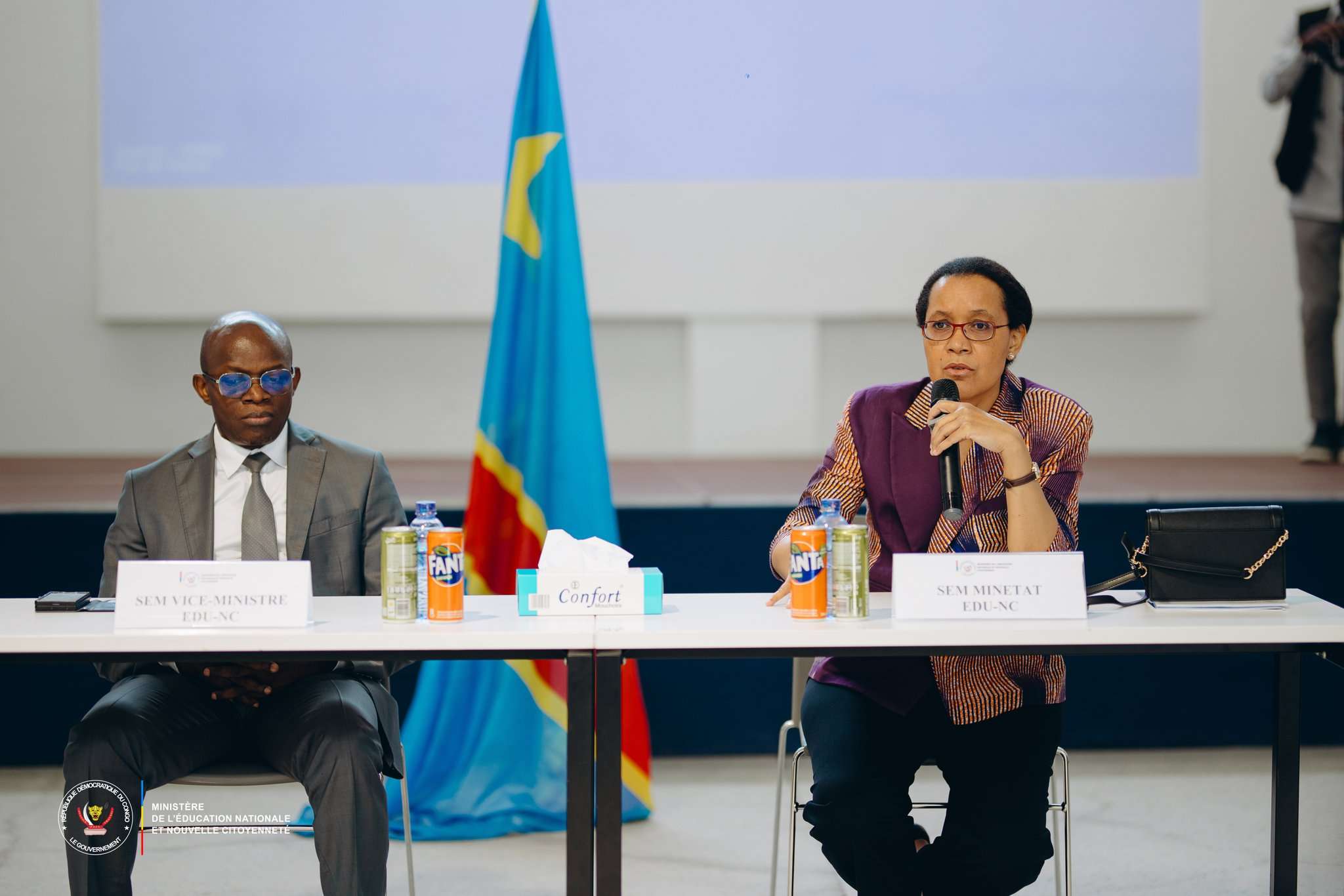
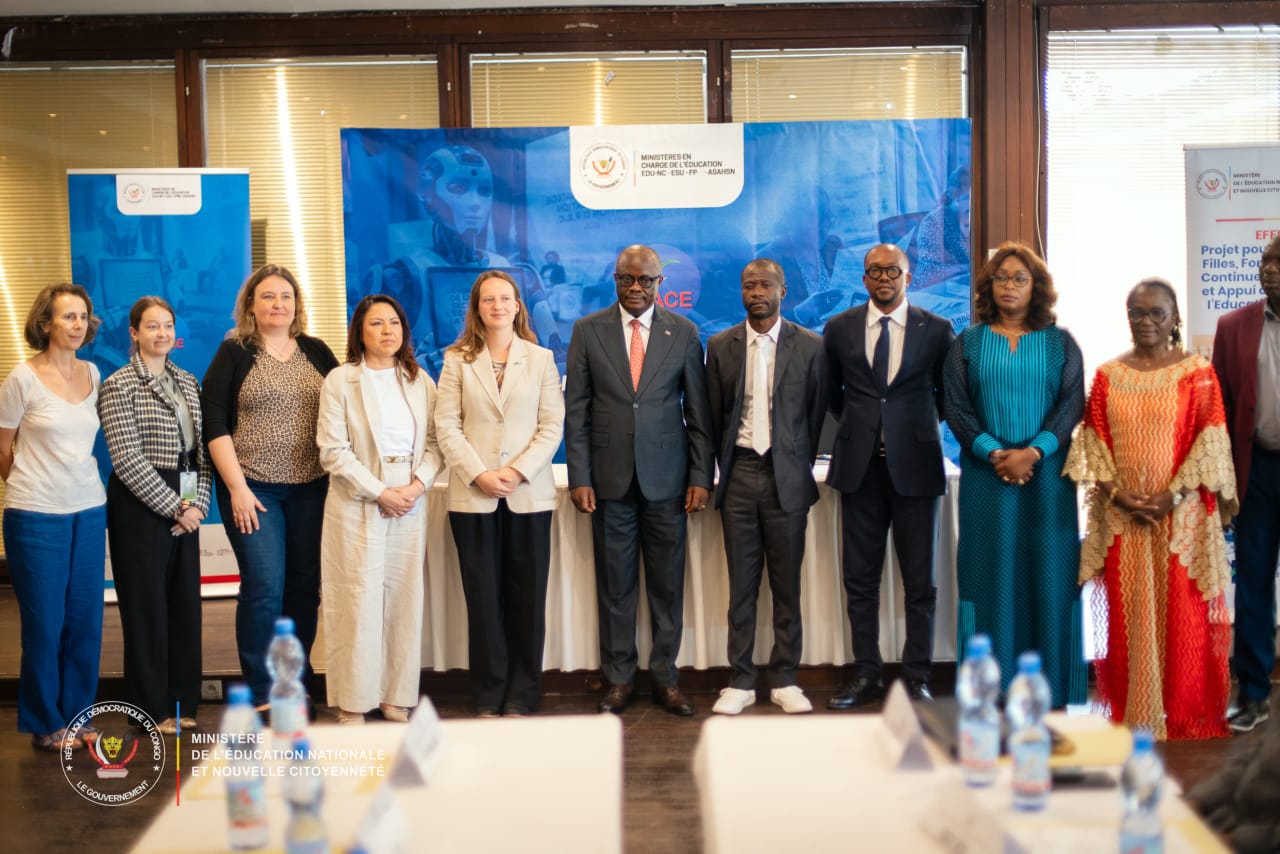
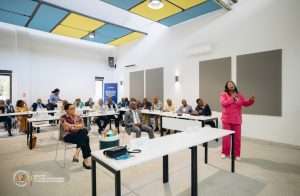
National Education Day was celebrated on April 30, 2025, in the Democratic Republic of the Congo under the theme: "Educate to transform, train to build." This topic was the focus of a discussion session organized on the sidelines of the event in Silikin Village, Kinshasa/Gombe, by the Ministry of National Education and New Citizenship (EDU-NC).
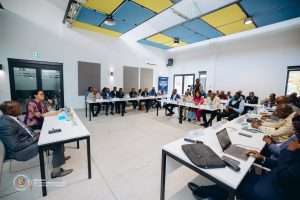
The session was led by its initiator, Minister of State and Minister of EDU-NC Raïssa Malu, who was accompanied by Deputy Minister of EDU-NC Jean-Pierre Kezamudru, Acting Secretary General Mathieu Munkenge Bakina, Inspector General Hubert Kimbonza, ministry officials, and representatives from the Permanent Secretariat for Support and Coordination of the Education Sector (SPACE), the Girls’ Learning and Empowerment Project (PAAF), and the Primary Education Quality Improvement Project (PEQIP). The head of the sub-sector laid the groundwork for this day of reflection, while emphasizing its technical nature in order to define the scope of the discussions.
Among the speakers was SPACE Coordinator Professor Valère Munsya, who presented the conceptual foundations of education, training, and the transformation of the education system. He noted that ongoing global developments necessitate a radical reevaluation of the education system with the advent of Artificial Intelligence (AI) and a demographic tipping point. He argued that this requires strategic reflection and a political decision by the government involving the nation’s key stakeholders.
In addressing the issue of improving and transforming the education system, Professor Valère Munsya referred to the Sectoral Strategy for Education and Training (SSEF) and emphasized the need to change teaching and learning content and methods. He also discussed the strategic and operational challenges to be addressed, as well as the importance of data, planning, and capacity building for education stakeholders.
Regarding the reforms led by SPACE, Professor Valère Munsya highlighted the implementation of basic education, free primary education, the introduction of national languages as the medium of instruction, the strengthening of English language instruction, the LMD system, the introduction of pre-primary classes, the strengthening of public-private partnerships, the professionalization of teacher training, and the establishment of an insurance scheme.
Speaking next, the Advisor to the Minister of State for Higher and University Education, Professor Keny Kale, presented the Ministry of EDU-NC’s 2024–2029 Five-Year Plan, which is a strategic vision with the mission of transforming the education system. He explained the context and the challenges, before providing an overview of the five guiding principles, five strategic objectives, and five priority areas of this important document.
Professor Keny Kale also presented the expected outcomes by 2029, notably expanded and equitable access to a resilient education system, improved educational quality, and active citizenship, with the goal of fostering a new generation of citizens.
PEQIP Project Coordinator Wali Belade, for her part, highlighted the strategic alignment between the project she leads and other projects in the EDU-NC sub-sector, notably the PAAF, the Girls’ Education Project, Initial and Continuing Teacher Training and Support for Educational Continuity (EFFICACE), and the Project for Equity and Strengthening of the Education System (PERSE). According to Wali Belade, the development objective of the PEQIP project is to increase access to improved learning environments and strengthen the quality of teaching practices and system management.
She then noted that PEQIP is a DRC government project, funded by the World Bank to the tune of $67 million and implemented in five provinces of the country: Ituri, Kasai, Kasai Central, Kasai Oriental, and South Kivu.
Wali Belade also noted that this project aligns with Sustainable Development Goal 4 (SDG 4), the Sectoral Strategy for Education and Training, the Partnership Pact, and the Five-Year Plan of the Ministry of Education and National Culture.
For his part, PAAF Coordinator Thierry Betukumesu provided an overview of the strategic priorities of the reforms driven by this project, including expanding access to and ensuring equity in education; promoting learning and education for all; and fostering civic engagement.
Another speaker of the day was EDU-NC Inspector General Hubert Kimbonza. He placed particular emphasis on Article 232 of the Framework Law on Education, which addresses the implementing measures to be put in place within 12 months of a law’s adoption—in this case, the law governing the organization of basic education.
Deputy Minister Jean-Pierre Kezamudru, for his part, emphasized the importance of the practical aspect of reforms, which must make learners useful to society. He lamented the decline in educational standards, even at the higher education level, stressing that the problem stems from its roots—namely, primary education.
Minister of State Raïssa Malu, who concluded the series of remarks, noted that in less than 10 years, more than one billion U.S. dollars have been invested in the education sector. She emphasized that we must focus on a return on that investment—that is, ensuring children are educated to transform society.
“Let no one say anymore that education and health are the only sectors providing jobs in the country; otherwise, we will have failed in educating our children. We must educate children in all fields,” she said, specifying that the Five-Year Plan must serve as a reference document for results tied to specific indicators.
Raïssa Malu also highlighted the importance of digitally archiving the ministry’s decrees, orders, and other key documents, before addressing the issue of schools of excellence.
At the conclusion of this brainstorming session, three major reforms were proposed: the professionalization of initial and continuing teacher training; basic education, for which implementation measures must be developed; and reform aimed at strengthening administration with a view to the governance of the education system.
Christian BELLA
Filter by structure or document type to find the right content.

For any report or information related to national education and new citizenship, call 178