Actualités
16 April 2026

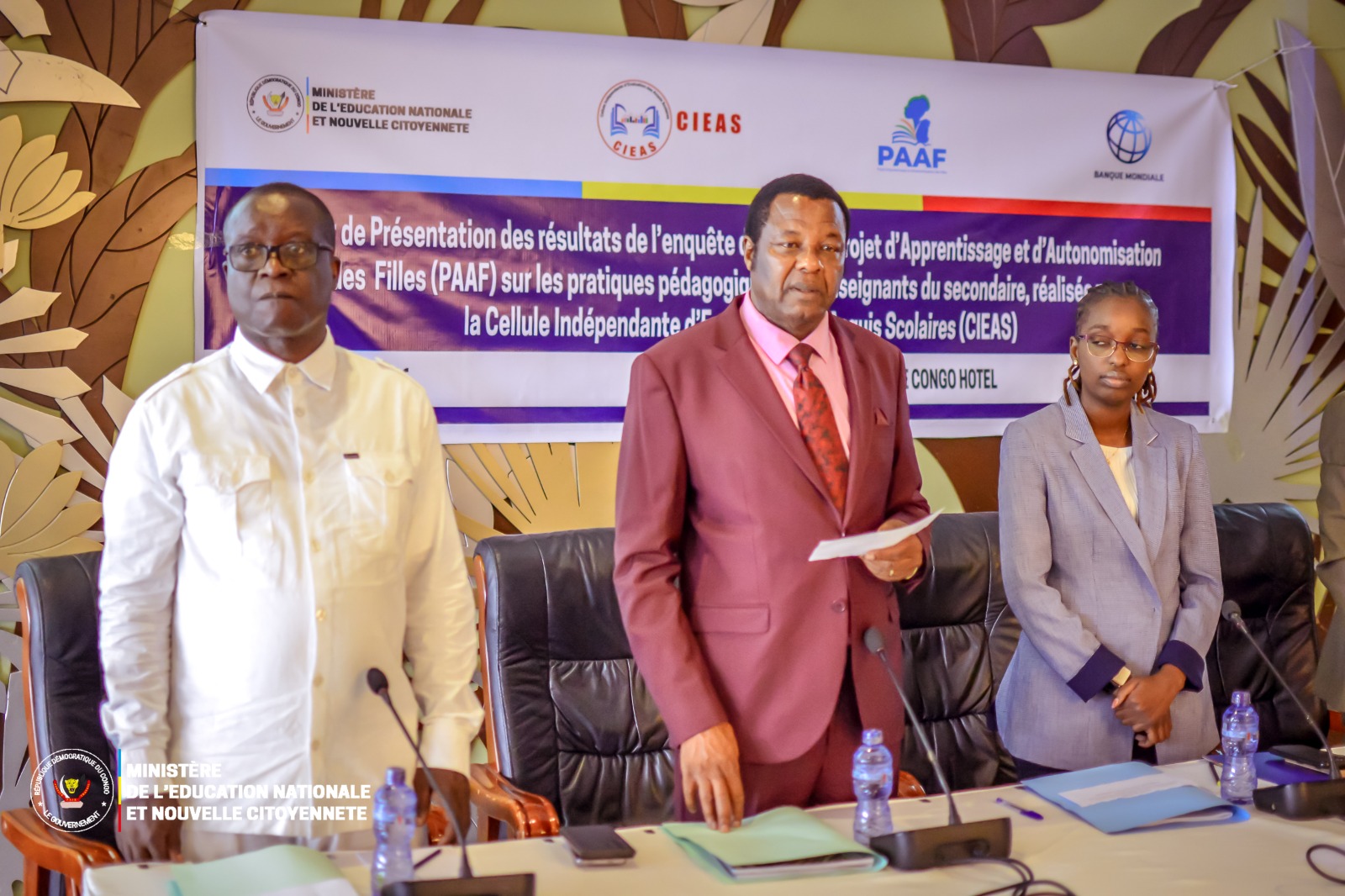
“The 2016–2025 Sectoral Strategy for Education and Training (SSEF), one of whose priority areas is strengthening the governance of the education system, has noted an exponential increase in the number of administrative offices across the Republic in recent years. This situation has hampered the management and governance of the education system to the point of impacting its other priority areas, including access to and the quality of education,” he emphasized.These meetings are part of the work of the Provincial Technical Rationalization Committee (CTPR), established in September 2022 under the auspices of the minister responsible for national education in the province, tasked in particular with validating the results of the work of the Technical Working Groups (GTPs) from three educational provinces, namely Kwilu 1, Kwilu 2, and Kwilu 3.
 Governor Philippe Akamituna recalled that in May 2025, education stakeholders had already drafted an initial provincial rationalization plan during workshops held at the Lenku and Éléphant hotels. This document has since been submitted to the National Committee for review.
“This continuity aims to refine the work already begun and make the necessary adjustments for an effective reform,” he stated, calling on everyone to exercise responsibility and expertise. He emphasized the importance of this reform’s success, comparing its challenges to “labor pains,” but stressing its indispensability for improving educational governance.Continuing the “streamlining” efforts For his part, the Provincial Director of National Education and New Citizenship for Kwilu 1, Mungeta Makulea Hervé, noted that the rationalization is part of the same process as the payroll cleanup operations recently carried out by provincial inspectors and supported by a national mission including DINACOPE.
“This is a government reform. We must all support it. Kwilu was already ranked the best province at the last conference, and we intend to stay the course,” he stated.Over the course of three days, participants will be tasked with establishing an updated and validated mapping system, the cornerstone of the national reform to streamline the education system in the DRC. This is the third phase of this national process to streamline administrative offices, initiated in the ten administrative provinces covered by the PERSE project. It focuses specifically on validation at the administrative provincial level, which is now underway. The first phase focused on awareness-raising in the educational provinces, followed by the second phase, namely the collection of mapping data on administrative offices. A well-defined legal and institutional framework The national framework regulating the establishment of administrative offices and public educational institutions was established in 2014, pursuant to Framework Law No. 14/004 of February 11, 2014, on national education. The rationalization process is based on technical committees established by Ministerial Decree No. MINEPSP/CABMIN/070/2022 of June 27, 2022: • The National Rationalization Committee (CNR) at the central level; • The Provincial Technical Rationalization Committees (CTPR) in the administrative provinces; • The Provincial Working Groups (GTP) in the educational provinces. These technical rationalization committees (CTR) are tasked with developing and implementing the rationalization plan for administrative offices and primary and secondary schools. Marie Shomba
Filter by structure or document type to find the right content.

For any report or information related to national education and new citizenship, call 178