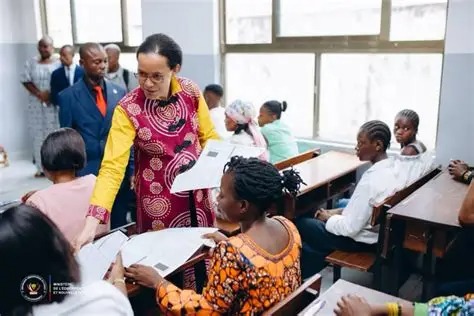
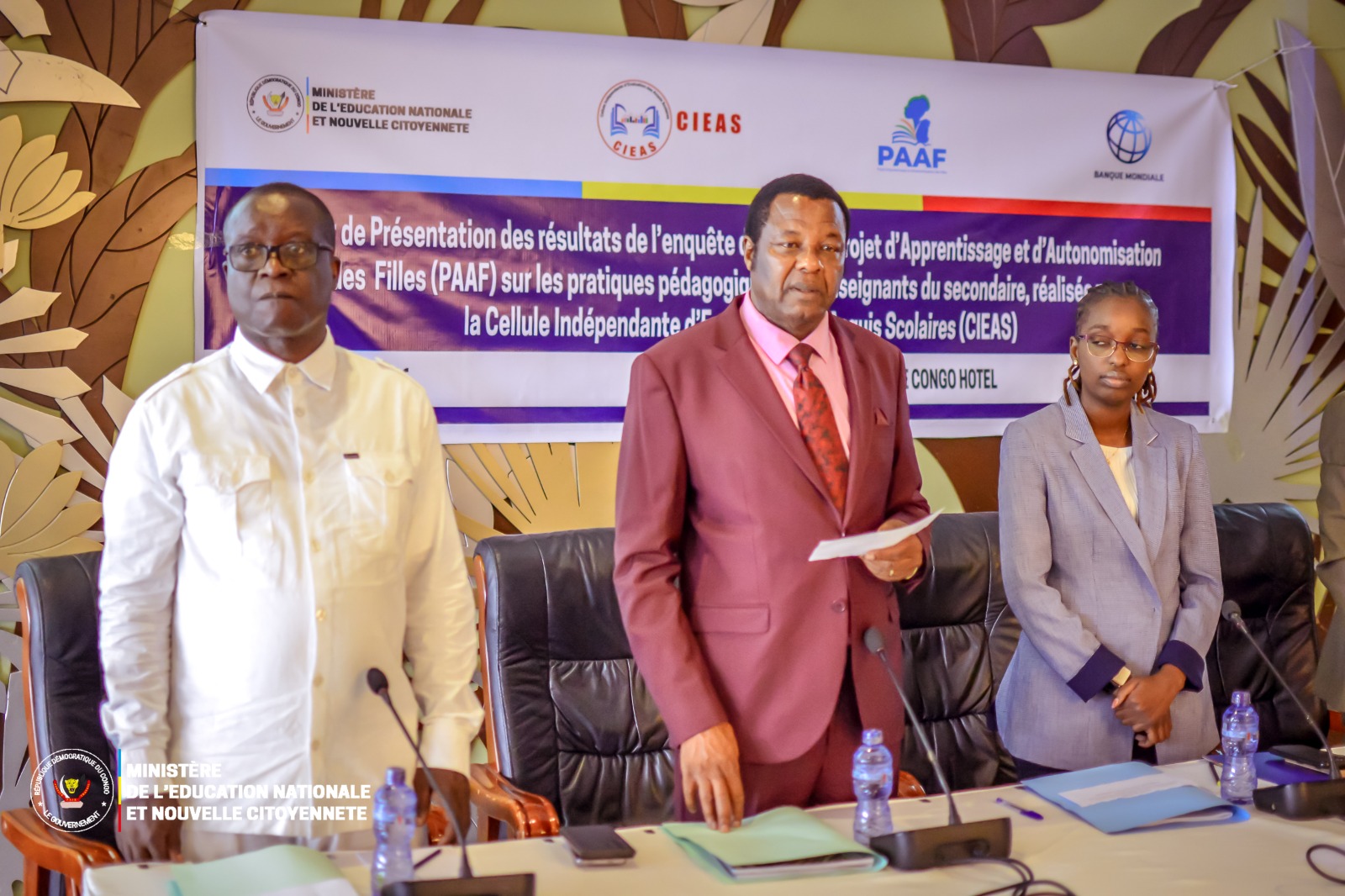
Committed to ensuring safety and inclusion in schools and to addressing the risks of gender-based violence, exploitation, sexual abuse, and sexual harassment (GBV/EAS-HS), as well as other forms of violence against children in school settings, the Ministry of National Education and New Citizenship(EDU-NC) has committed to addressing this challenge by establishing the Complaint Management Mechanism (MGP), implementing specific procedures to manage and process complaints of EAS and HS (MGP-EAS/HS), and requiring all teachers to sign a declaration of commitment to adhere to the Code of Conduct for Teaching Staff.
It is within this framework that the PERSE project has identified and trained 21,103 Focal Points for combating gender-based violence, exploitation, sexual abuse, and sexual harassment (GBV/EAS-HS), at a rate of one focal point per primary school, with the mission of providing basic psychosocial support and referring victims to local care services.
Since September 2019, the Congolese government has made primary education free in public schools throughout the country. This measure is one of the priority reforms contained in the 2016–2025 Sectoral Strategy for Education and Training.
Implemented by the Ministry of National Education and New Citizenship, the Project for Equity and Strengthening of the Education System (PERSE), carried out with financial support from the World Bank, aims to reduce the burden of school fees on households, improve access to public primary education, and strengthen fundamental education systems at the national level.
The in-depth social analysis presented in October 2024 as part of the PERSE project identified several social risks, including those related to school-related abuse and exploitation (EAS/HS) to which children are exposed in school settings due to overcrowded classrooms, the presence of older children in primary school, and the mixing of adolescent students of different genders and sexual orientations.
Furthermore, PERSE has established the toll-free number 178 to receive complaints regarding exploitation, sexual abuse, and sexual harassment (EAS/HS), including the referral of reported cases to services providing support for survivors.
To ensure the MGP functions more effectively, key stakeholders at all levels of the system have participated in this series of training sessions to enable them to perform their roles effectively and fully assume their responsibilities.
These training sessions, conducted in three phases, began with the training of a central core group in Kisantu, followed by the training of provincial and sub-provincial core groups, and concluded with the training of GBV and EAS/HS focal points in schools across the provinces of Kasai, Kasai Central, Kasai Oriental, Congo Central, Bas-Congo, Kwilu, and Kinshasa during the month of March 2025.
The objective of this activity, which involved 670 provincial trainers deployed across 305 sub-divisions to train 20,100 women focal points, was to strengthen the capacities of stakeholders involved in managing EAS/HS complaints within the framework of the Equity Project for Strengthening the Education System (PERSE), aimed at ensuring the sustainability of free education.
In addition to equipping the focal points with facilitation approaches for preventing and responding to EAS/HS risks, providing basic psychological support, and referring cases to care providers, as well as helping them understand how the MGP operates in school settings, this training enabled provincial and sub-provincial officials to master the principles, tools, and approaches of adult education for facilitating training on GBV/EAS-HS case management, information management, and reporting complaints in accordance with established principles and procedures while adhering to relevant deadlines. Practicing active listening, communicating with minors, and understanding the risks of sexual and physical abuse in school settings.
As Ms. Patricienne LUKADI of the KATANGA Training Center in Kasaï attests:
“I was unaware of the different types of violence and the difference between abuse and harassment; this training has significantly increased my knowledge, and I am confident that this knowledge will enable me to effectively manage daily complaints and cases of GBV, EAS, and HS in our school.”
For his part, Mr. Abraham Babisha Ntwaranyi, Head of the Mweka Provincial Division, asserts that the training on GBV and EAS/HS came at a time when the entire school community—teachers, students, and parents alike—needed it. “We hope,” he says, “that it will have a positive impact on the issue of school dropouts caused by physical and sexual violence, which has become commonplace in schools.”
According to the 2018 MICS survey, 23% of women and 24% of men aged 15 to 49 have personally felt they were victims of discrimination or harassment. The same survey reveals that 64% of adolescent girls experience forced sexual initiation or have had their first sexual encounter in a non-consensual manner. Access to information and sex education for young people remains a challenge, as 19% of girls aged 15–24 had sexual intercourse before the age of 15 and the early fertility rate stands at 24%.
According to a study conducted by the Ministry of Gender in 2018 in the city of Kinshasa, 84% of school administrators believe that family living conditions can influence student dropout rates. 62% of those surveyed in this study believe that romantic relationships students develop inside or outside of school can lead to some school dropouts. Additionally, 58% of this group believe that learning conditions at school are likely to impact school dropout rates.
Note that this training program, intended to reach the 10 provinces where the PERSE project is being implemented, was only carried out in 7 provinces, with the exception of North Kivu, South Kivu, and Ituri, which are currently plagued by insecurity and under occupation.
Elisée WABOMUNDUS, PERSE Communications Specialist