Reforming the education system: The DRC tests and stabilizes teaching guides for quality education
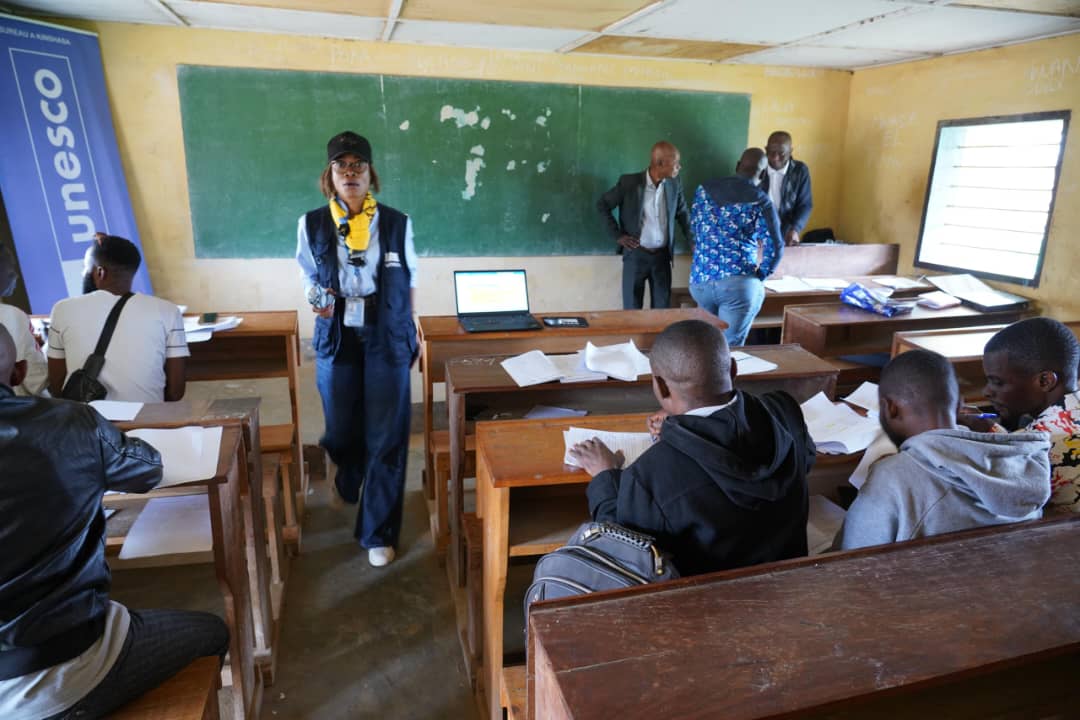
As part of the EFFICACE project, a key initiative for reforming the Congolese education system is taking place from August 10 to 19, 2025, in Mbanza-Ngungu, in Kongo Central. The goal is to test and finalize the teaching guides for the five learning domains as well as for the internships.
The first phase of this mission, taking place from August 10 to 14, focuses on testing and finalizing the teaching guides. The Pedagogical Humanities and Primary Schools (HP and EP) will serve as the testing ground for this phase. From August 15 to 19, participants in this reform mission will gather for a workshop, called the “stabilization workshop,” during which feedback will be incorporated to finalize the documents.
The specific objectives of this mission include evaluating the interpretation of the guides, identifying barriers to their understanding, testing mechanisms for producing teaching materials, and compiling lists of necessary materials for Pedagogical Humanities and Primary Schools.
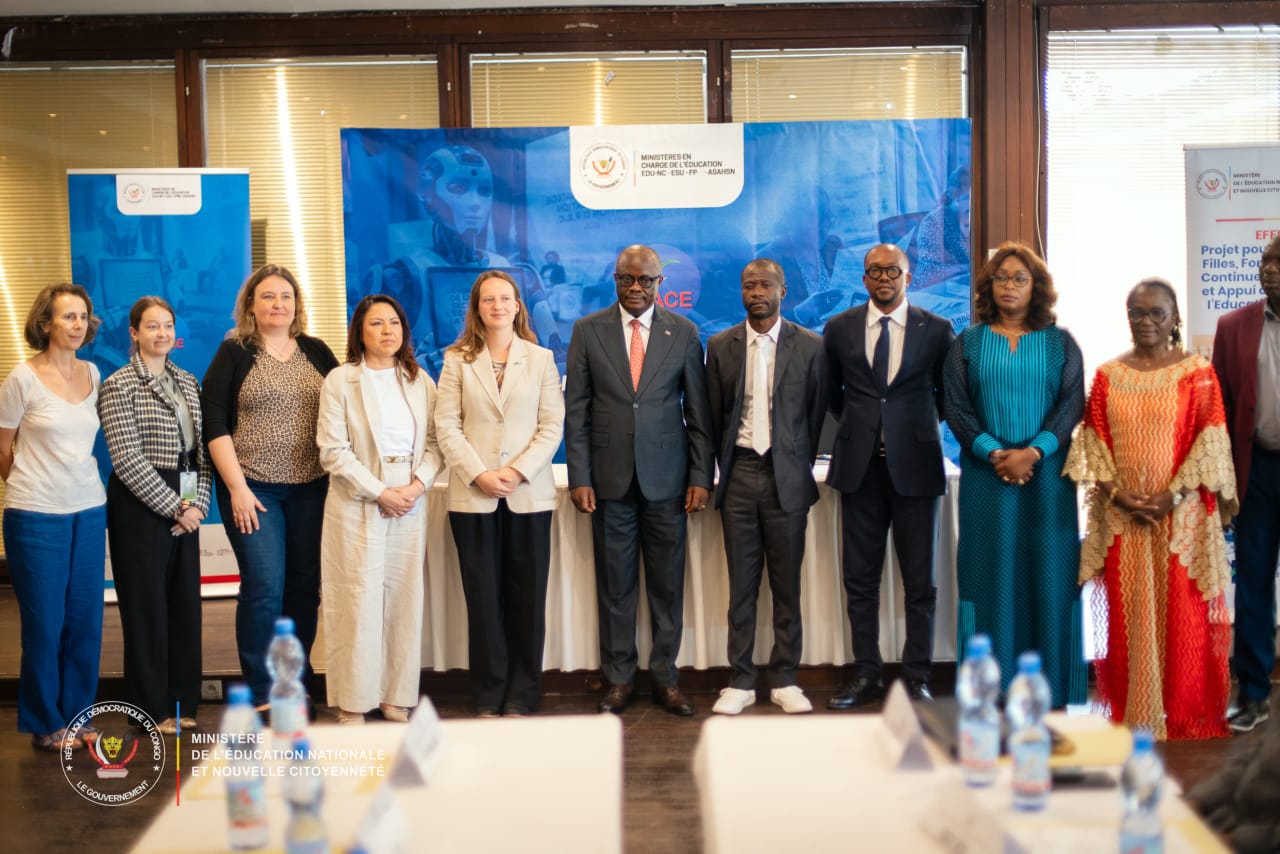
Under the coordination of DIFORE-BG, this reform mission brings together all stakeholders in the education sector in a collaborative and constructive effort. It represents a key step toward teacher training that is more coherent, equitable, and adapted to on-the-ground realities, with the hope of significantly improving the quality of education in the Democratic Republic of the Congo.
It should be noted that the Democratic Republic of the Congo, supported by its technical and financial partners, has embarked on a profound educational reform.
Two sub-components implemented by UNESCO are at the heart of this reform: the professionalization of educational sciences and the capacity-building of in-service teachers and school principals. These priorities are part of a holistic and inclusive vision of teacher policy, incorporating a gender perspective and the interrelationships between different levels of education.
Indeed, the alarming results of the 2019 PASEC reveal that 73% of Congolese students fail to reach the minimum reading proficiency threshold by the end of primary school, while 82% fail in mathematics. These figures point to a crisis in educational quality, often linked to the inadequacy of initial and continuing teacher training, as well as to teacher demotivation.
To address these challenges, several teaching guides have been developed, covering learning areas such as languages, science, personal development, and the arts. These tools aim to structure the training of future teachers and harmonize teaching practices across the country.
In this context, the main objective of the Girls’ Education, Initial and Continuing Teacher Training, and Support for Educational Continuity Project (EFFICACE) is to professionalize the teaching profession and improve the quality of learning.
Marie Shomba