Actualités
16 April 2026

Speaking before the United Nations Security Council on Monday, March 2, in New York, during a debate on the protection of children in the digital age, the Ambassador of the Democratic Republic of the Congo, Zénon Ngay Mukongo made a strong plea for the right to education in conflict situations, while denouncing the direct consequences of the war imposed on the eastern part of the country.
“For more than three decades, our country has experienced recurring cycles of violence and armed conflict, particularly in its eastern region,” he stated.
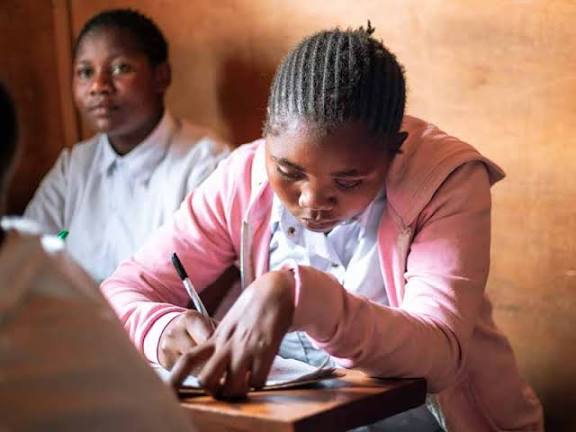
Zénon Ngay Mukongo noted that millions of Congolese children are deprived of a fundamental right: the right to access “safe, inclusive, and quality education.”
An explicit condemnation of the abuses committed by the M23 and the RDF
The ambassador specifically highlighted the situation in South Kivu province, where the M23 and the Rwandan Defense Forces (RDF) operate.
“In South Kivu province alone, where the M23 and the Rwandan Defense Forces have been operating with impunity since the beginning of 2025, in violation of our national laws, the United Nations Charter, and international humanitarian law, the impact of the conflict on education is alarming,” he denounced.
Among the consequences cited:
• Of 8,400 schools, 1,768 are no longer operational;
• 167 schools are occupied by armed groups;
• 72,214 students, including 36,068 girls, are directly affected.
Even more seriously, he added, “free education is being undermined,” as Rwandan troops and M23 rebels have decided “to impose tuition fees in public and private schools in the territories under their control.”
Free education, a pillar of the presidential vision
In light of this situation, the DRC reaffirms its structural commitment to education. The ambassador noted that education constitutes “not only a fundamental right, but also a major pillar of stability” for the country.
He highlighted the policy of free education enacted in 2019 by President Félix Tshisekedi.
“The policy of free education aligns with the vision of improving access to education and new technologies for all Congolese children,” he emphasized, stressing that this structural reform contributes to strengthening national cohesion.
A Strategy for Education in Emergency Situations
Beyond free education, the DRC adopted in 2025 a Strategy for Education and Training in Emergency Situations 2025–2029.
In his presentation, the ambassador explained the essence of this strategy, which aims “to build a resilient, inclusive, and protective education system capable of ensuring the continuity of learning before, during, and after crises.”
In this context, digital technology is presented as a key lever.
“The use of digital technology is now essential for mitigating the effects of conflict on education,” he stated, citing distance learning platforms and mobile tools as solutions for maintaining educational connections with children who are displaced or living in isolated areas.
A Call for International Responsibility
Finally, the DRC emphasized the need to place children’s rights and respect for international humanitarian law at the heart of peace strategies.
“Technology must never be a factor of exclusion for our children. On the contrary, it must become an instrument of resilience, healing, and equal opportunity,” the ambassador concluded, calling for increased international support for the development of educational and digital infrastructure in conflict-affected areas.
Through this statement, Kinshasa has thus conveyed a twofold message: denouncing the devastating effects of the war waged by the M23 and the RDF in the eastern part of the country, while reaffirming its determination to make free education and schooling in emergency situations key priorities of its national policy.
Moïse Dianyishayi
Filter by structure or document type to find the right content.

For any report or information related to national education and new citizenship, call 178